Engineering Insights

Articles

433 articles on embedded systems, firmware, FPGA, and engineering recruitment.

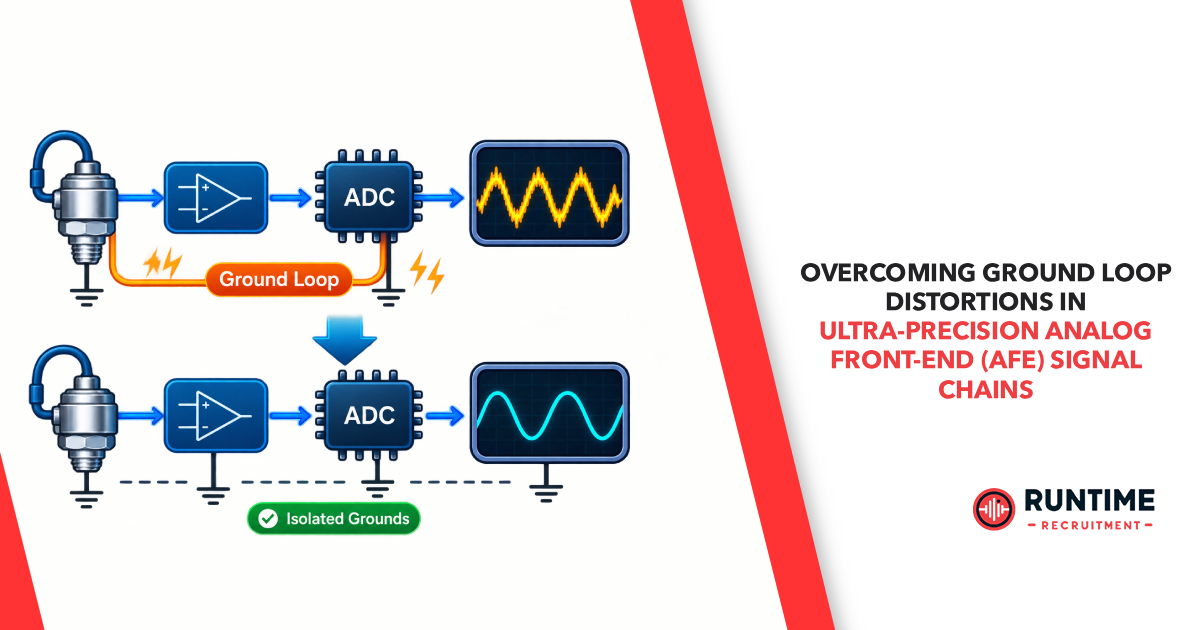
Overcoming Ground Loop Distortions in Ultra-Precision Analog Front-End (AFE) Signal Chains
Technical18 November 2026

Overcoming Ground Loop Distortions in Ultra-Precision Analog Front-End (AFE) Signal Chains

Designing ultra-precision instrumentation — whether for medical diagnostic imaging, high-resolution scientific mass spectrometry, or advanced industrial process automation — presents a relentless, high-stakes war against noise. As semiconductor manufacturers push the boundaries of silicon performance, 24-bit and 32-bit analog-to-digital converters (ADCs) have become industry standards. System architects and embedded hardware engineers now routinely target sub-microvolt noise floors and dynamic ranges exceeding 120 decibels. Yet, all too often, meticulous schematic capture, component selection, and low-noise power supply design are completely undermined during system integration by a classic, insidious adversary: the ground loop. Ground loops turn a carefully engineered printed circuit board (PCB) into an accidental antenna or a victim of internal voltage drops, stripping away precious bits of resolution and introducing harmonic distortion that digital post-processing can rarely fix.

Read More >>
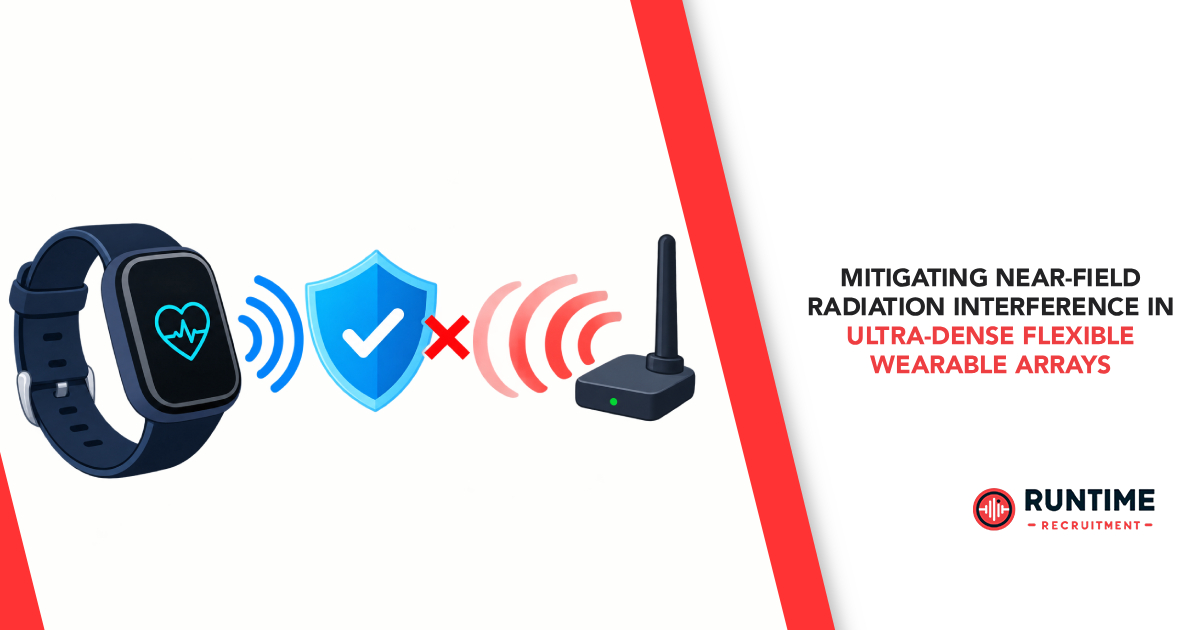

Mitigating Near-Field Radiation Interference in Ultra-Dense Flexible Wearable Arrays
Technical17 November 2026

Mitigating Near-Field Radiation Interference in Ultra-Dense Flexible Wearable Arrays

The race toward next-generation wearable technology has pushed hardware architectures far beyond the comfort zone of traditional rigid printed circuit board design. Modern biomedical monitors, high-density electromyography and electrocardiography mapping grids, smart clothing, and advanced human-machine interfaces require multi-channel sensor arrays packed into flexible, stretchable substrates. As designers compress dozens or even hundreds of radio frequency elements, high-speed routing traces, and bio-potential sensing nodes into millimeter-scale footprints on polyimide, liquid crystal polymer, or thermoplastic polyurethane, they encounter a formidable physics problem: near-field radiation interference. In ultra-dense flexible arrays, classical far-field electromagnetic compatibility assumptions break down entirely. Signal degradation is no longer primarily driven by plane-wave radiated emissions or far-field antenna patterns. Instead, performance loss is dominated by near-field inductive and capacitive coupling between adjacent traces, sensor electrodes, and high-frequency radio frequency components. When these flexible substrates flex, twist, and stretch around the human body, dynamic geometry continuously modulates coupling impedances, triggering transient cross-talk, ground bounce, and phase distortion.

Read More >>
Designing Neuromorphic Hardware Nodes: Low-Power Analog Spiking Neural Networks at the Edge
Technical12 November 2026

Designing Neuromorphic Hardware Nodes: Low-Power Analog Spiking Neural Networks at the Edge

The edge computing paradigm has hit a thermodynamic wall. Traditional Von Neumann architectures, constrained by the memory wall and the continuous power drain of digital clock networks, are increasingly unsuited for micro-power edge AI deployments. When designing sensing nodes operating under micro-watt power budgets — such as continuously monitoring biomedical patches, remote acoustic surveillance sensors, or ultra-low-power industrial vibration monitors — traditional Digital Signal Processing (DSP) paired with Deep Neural Network (DNN) accelerators consumes too much energy per inference. Enter Neuromorphic Hardware Nodes: silicon architectures engineered to mimic the brain’s temporal, event-driven processing capabilities. By shifting from synchronous digital clocking to low-power analog Spiking Neural Networks (SNNs), embedded hardware engineers can reduce dynamic energy consumption by orders of magnitude.

Read More >>
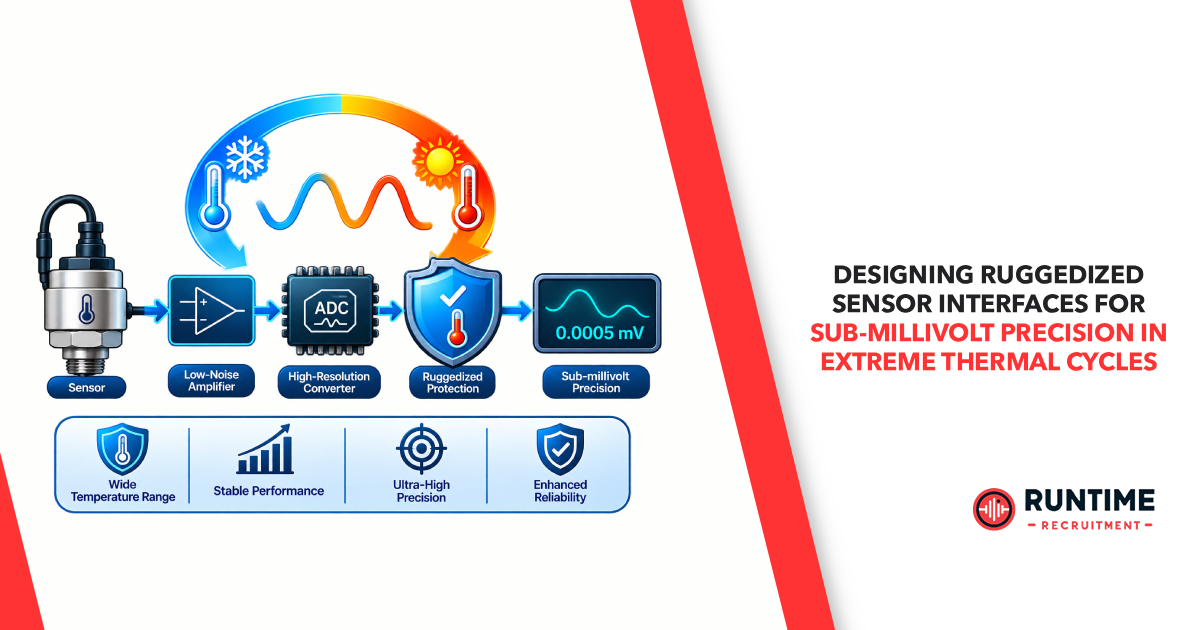
Designing Ruggedized Sensor Interfaces for Sub-Millivolt Precision in Extreme Thermal Cycles
Technical11 November 2026

Designing Ruggedized Sensor Interfaces for Sub-Millivolt Precision in Extreme Thermal Cycles

For embedded systems engineers working in aerospace, heavy automotive testing, energy exploration, and industrial automation, bridging the physical world to the digital domain is an exercise in managing harsh compromises. When your system must extract pristine sub-millivolt signals, such as thermocouple outputs, bridge-based strain gauges, or low-side current shunts, while enduring extreme thermal cycles ranging from minus fifty-five degrees Celsius to plus one hundred fifty degrees Celsius and occasionally far beyond, standard design rules fall apart. In these hostile environments, a microvolt is not just a unit of measurement; it is the thin boundary between a valid reading and catastrophic system failure. Thermal expansion, parasitic thermoelectric junctions, and component drift conspire to introduce errors that easily dwarf the actual sensor signal.

Read More >>
Addressing Soft Errors in Flash Memory: Advanced ECC Implementations for High-Altitude Avionics
Technical10 November 2026

Addressing Soft Errors in Flash Memory: Advanced ECC Implementations for High-Altitude Avionics

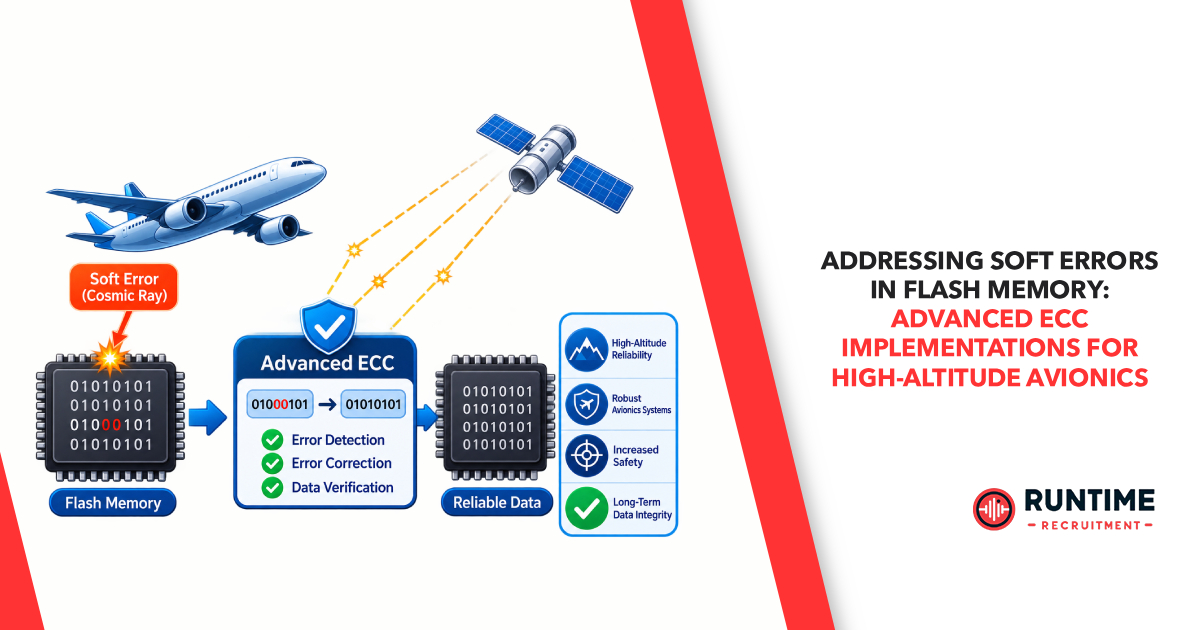
As commercial aviation pushes higher into the stratosphere and unmanned aerospace systems, satellite constellations, and high-altitude pseudo-satellites (HAPS) expand operational envelopes, embedded systems face an increasingly hostile environment. At cruising altitudes exceeding 35,000 feet — and escalating sharply into near-space — the protective shielding of Earth’s dense atmosphere thins exponentially. Here, avionics hardware is continuously bombarded by cosmic radiation, galactic cosmic rays (GCRs), and secondary neutron fluxes. For embedded systems designers, this atmospheric reality introduces a severe engineering hurdle: soft errors in non-volatile flash memory. While once a challenge primarily reserved for deep-space probes or terrestrial DRAM, the shrinking process nodes of modern NAND and NOR flash architectures mean that even non-volatile storage is increasingly susceptible to radiation-induced bit flips. Ensuring deterministic reliability in flight-critical avionics demands moving far beyond legacy error correction schemes. This article explores the underlying physics of high-altitude radiation failures, the limitations of traditional mitigation techniques, and how advanced Error Correction Code (ECC) architectures — specifically high-performance BCH and Low-Density Parity-Check (LDPC) codes — safeguard modern aerospace flash memory.

Read More >>
De-risking Senior Hires: Vetting System Architecture Skills Before Making a Director-Level Offer
Technical9 November 2026

De-risking Senior Hires: Vetting System Architecture Skills Before Making a Director-Level Offer

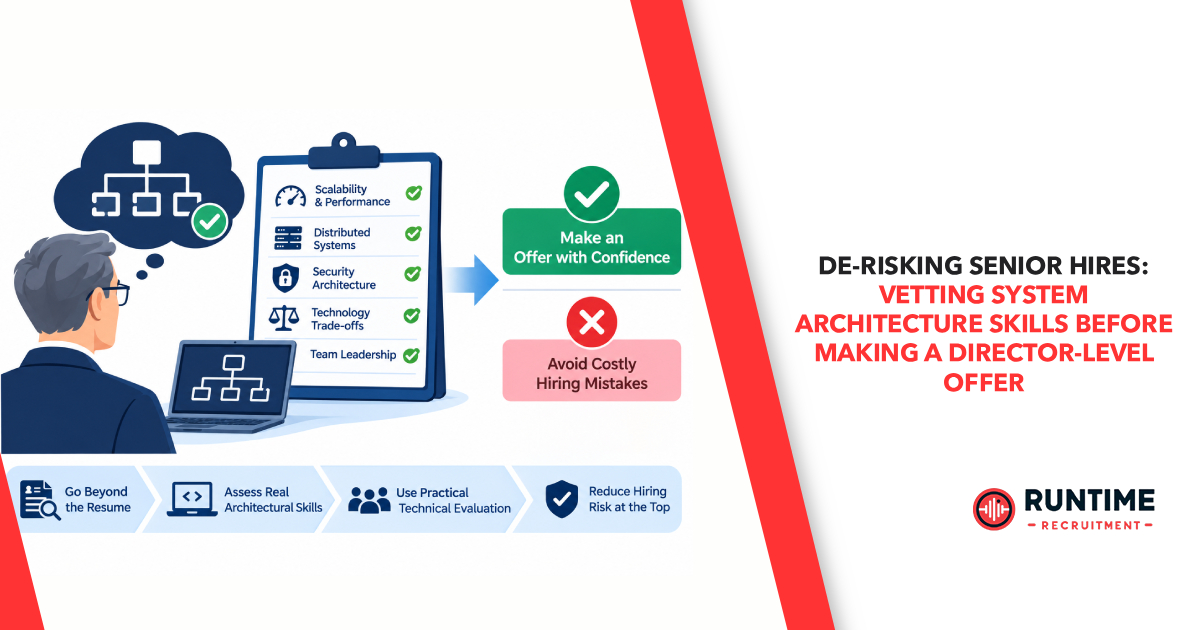
Hiring an executive or director-level leader in embedded systems engineering is one of the highest-stakes decisions a hardware or firmware organization will make. At the senior executive level, a bad hire is exceptionally expensive. Beyond recruiters’ fees and onboarding costs, an ill-fit Director of Embedded Engineering can derail technical roadmaps, select sub-optimal silicon architectures, lock a product into brittle firmware patterns, or trigger critical field failures. Most traditional hiring panels struggle to evaluate candidates at this level. Executive interviews frequently slide into high-level management talk — focusing on agile processes, team sizing, headcount budgeting, and vendor negotiations. While leadership acumen is essential, a Director of Embedded Engineering must ultimately safeguard the technical integrity of your product platform. If they lack sharp system architecture intuition, they will fail to catch multi-million-dollar technical risks before silicon is spun or firmware design patterns are locked. To de-risk your next senior hire, your interview process must rigorously vet system architecture capability without forcing a seasoned leader into low-level whiteboard coding contests. Here is how engineering organizations can evaluate real-world architectural leadership before issuing a director-level offer.

Read More >>
Mitigating Degradation and Drift in High-Precision Strain Gauge Analog Interface Circuitry
Technical29 October 2026

Mitigating Degradation and Drift in High-Precision Strain Gauge Analog Interface Circuitry

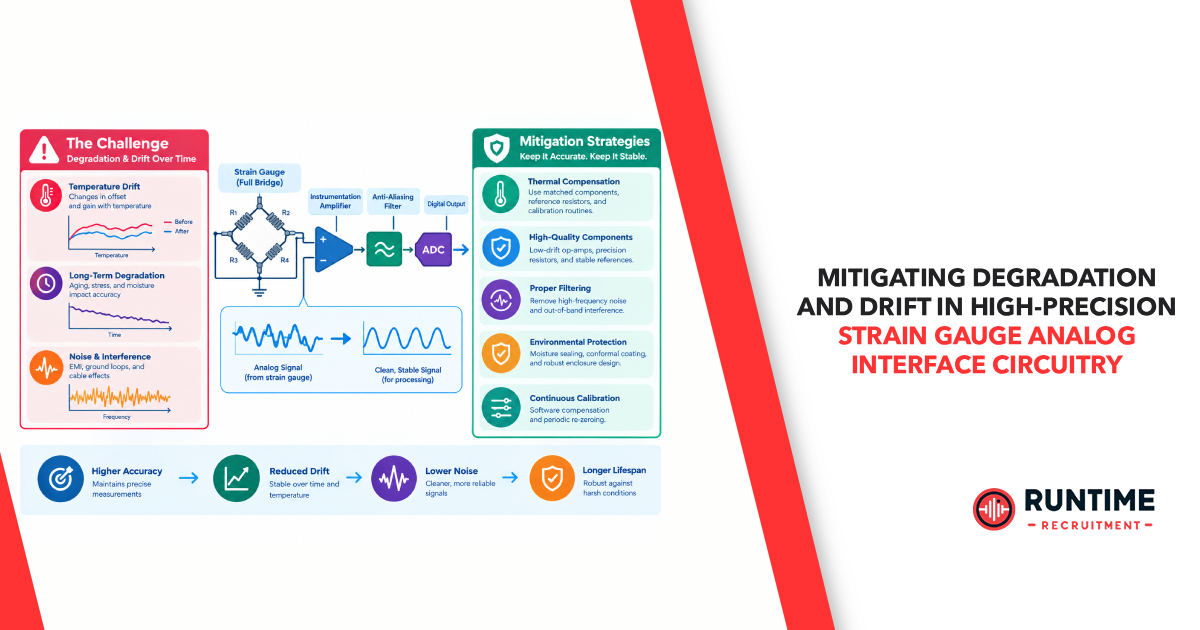
High-precision measurement systems relying on foil resistance strain gauges operate in notoriously hostile environments. From cryogenic wind tunnels and aerospace structural test stands to heavy industrial press floors and high-frequency tactile robotics, these systems are tasked with resolving microvolt-level signals in the presence of severe thermal fluctuations, electromagnetic interference, and mechanical stress. In these demanding applications, drift and degradation represent the primary failure modes of analog front-end accuracy. Over extended operational lifespans and wide thermal profiles, unmitigated zero-point drift and sensitivity drift erode calibration integrity. This degradation leads to false structural fatigue forecasts, inaccurate load-cell weighings, and catastrophic failures in safety-critical instrumentation.

Read More >>
Addressing Memory Contention in Multi-Master Bus Architectures Using Hardware Semaphore IP
Technical27 October 2026

Addressing Memory Contention in Multi-Master Bus Architectures Using Hardware Semaphore IP

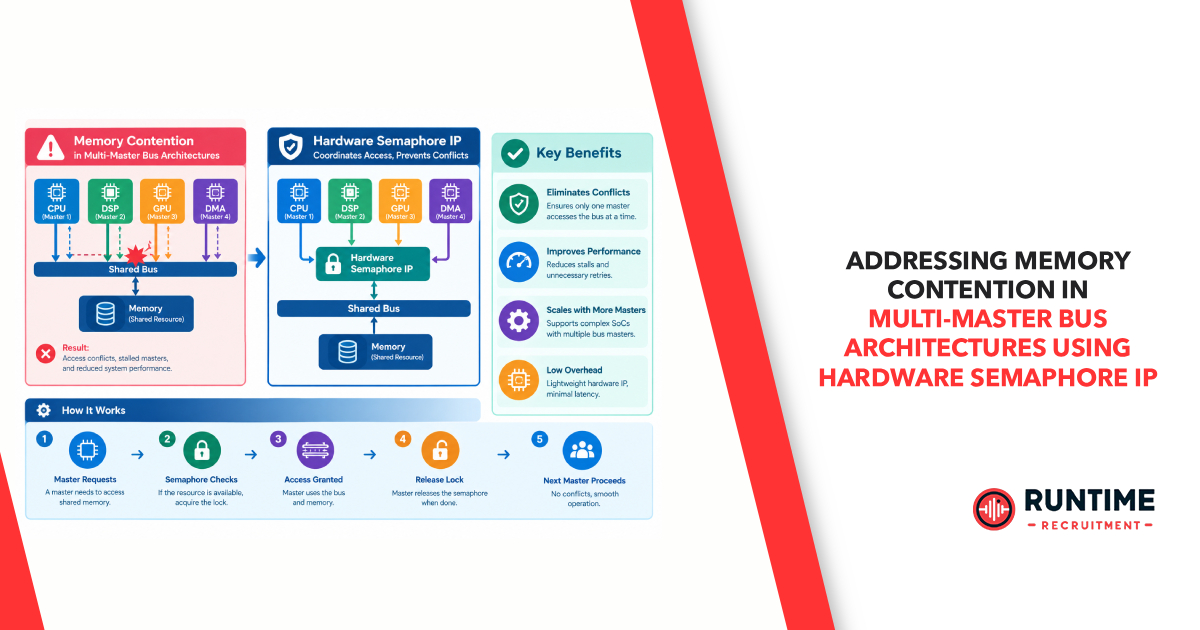
As modern embedded systems evolve from single-core microcontrollers to complex heterogeneous System-on-Chips (SoCs), the architectural demands placed on internal interconnects have shifted dramatically. Today’s high-performance embedded designs frequently feature multi-master bus architectures—combining multi-core application processors, real-time microcontrollers, direct memory access (DMA) controllers, and custom hardware accelerators or FPGA fabric blocks—all contending for shared resources such as off-chip DRAM, internal SRAM scratchpads, and peripheral register banks. While advanced bus matrices and high-throughput interconnect fabrics like AMBA AXI4 or TileLink do an exceptional job of managing data routing, they do not inherently solve the problem of logical synchronization. When multiple masters attempt to read, modify, and write to the same shared memory locations simultaneously, memory contention devolves into race conditions, data corruption, and catastrophic system instability.

Read More >>
Reducing Hiring Bias: Technical Evaluation Rubrics for Embedded Roles
Hiring26 October 2026

Reducing Hiring Bias: Technical Evaluation Rubrics for Embedded Roles

In the fast-evolving landscape of embedded systems engineering, the stakes for hiring have never been higher. Whether an organization is designing low-power IoT medical devices, automotive electronic control units (ECUs), or high-reliability aerospace flight software, the margin for error is razor-thin. A single memory leak, unhandled race condition, or poorly prioritized interrupt service routine (ISR) can result in catastrophic field failures, costly product recalls, or severe safety violations. Yet, despite the immense technical rigor required to build robust firmware and hardware-software co-designs, many engineering organizations continue to rely on antiquated, highly subjective hiring practices. When evaluating embedded candidates, hiring managers frequently fall back on unstructured interviews, "gut feeling" assessments, and pop-quiz style technical interrogations. These unstandardized methods not only fail to predict on-the-job success; they also introduce insidious hiring biases that systematically filter out exceptional engineering talent.

Read More >>
Security by Design: Recruiting Engineers Who Think Like Hardware Hackers
Hiring23 October 2026

Security by Design: Recruiting Engineers Who Think Like Hardware Hackers

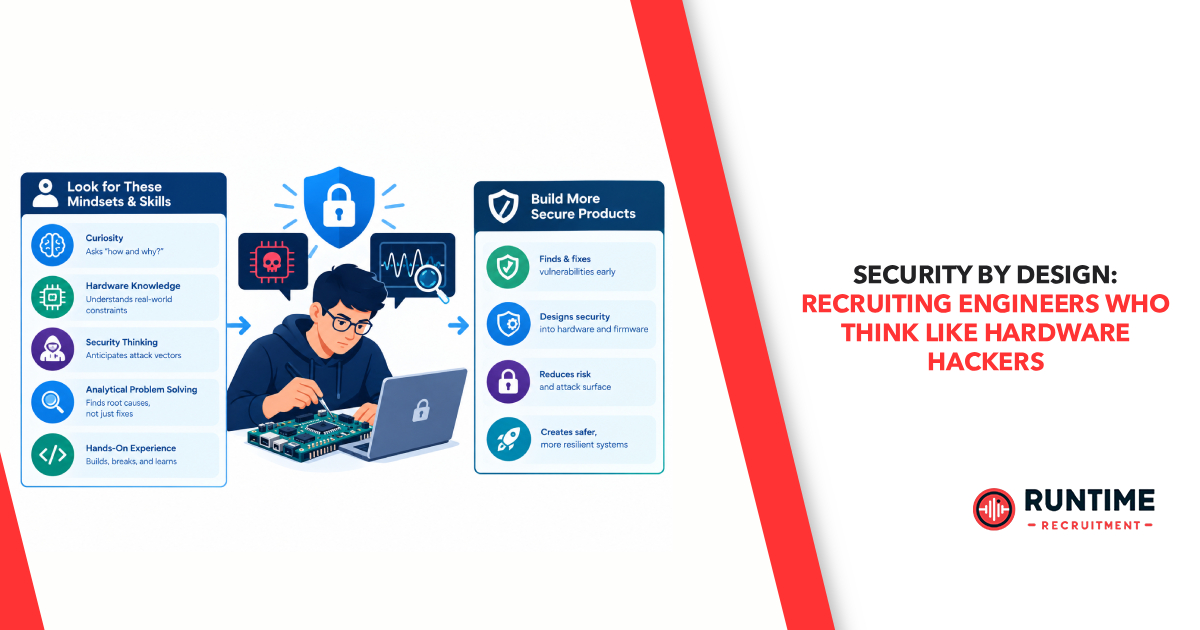
For decades, embedded software engineering treated security as a final-stage compliance exercise — a checklist applied just before flashing mass-production chips or shipping a device to customer sites. In an era dominated by isolated microcontrollers and closed air-gapped systems, that approach was often “good enough.” Today, the landscape has fundamentally shifted. Modern embedded systems — from autonomous automotive control units and medical devices to industrial edge gateways — operate in hyper-connected, hostile environments. When devices operate on exposed physically accessible perimeters, traditional software-only security boundaries disintegrate.

Read More >>
Securing the Silicon: Hardware Countermeasures Against Electromagnetic Fault Injection (EMFI) and Side-Channel Attacks
Technical23 October 2026

Securing the Silicon: Hardware Countermeasures Against Electromagnetic Fault Injection (EMFI) and Side-Channel Attacks

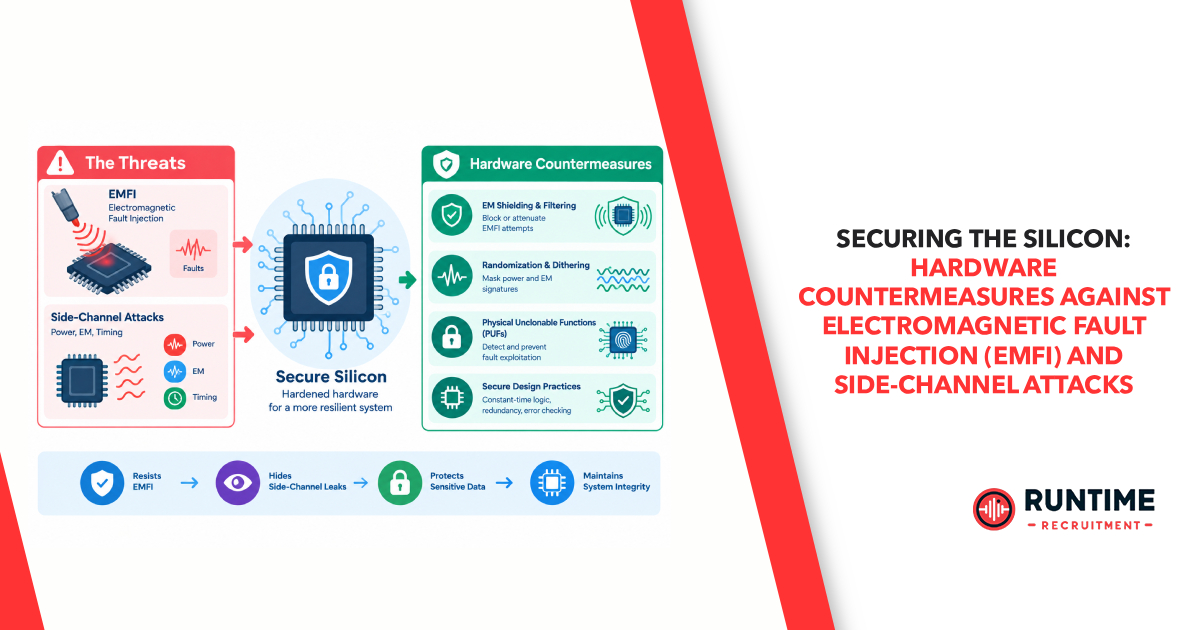
For embedded systems engineers, the perimeter of security has radically shifted. Historically, embedded security meant implementing secure boot chains, hardening firmware against buffer overflows, and applying robust cryptographic algorithms like AES or Elliptic Curve Cryptography (ECC). However, as software-layer defenses mature, sophisticated attackers have shifted their focus downward into the physical domain. Today, physical hardware attacks — specifically Side-Channel Attacks (SCA) and Electromagnetic Fault Injection (EMFI) — represent some of the most formidable threats to connected devices, industrial IoT, automotive electronic control units (ECUs), and payment terminals. Because these attacks bypass logical code boundaries by exploiting the fundamental laws of physics, embedded engineers can no longer treat silicon as a trusted black box. Designing secure hardware requires an intimate understanding of how microelectronic chips leak information and how they react to external physical disturbances.

Read More >>
Strategies for Preventing Conductive Anodic Filament (CAF) Growth in Ultra-Dense Circuit Boards
Technical22 October 2026

Strategies for Preventing Conductive Anodic Filament (CAF) Growth in Ultra-Dense Circuit Boards

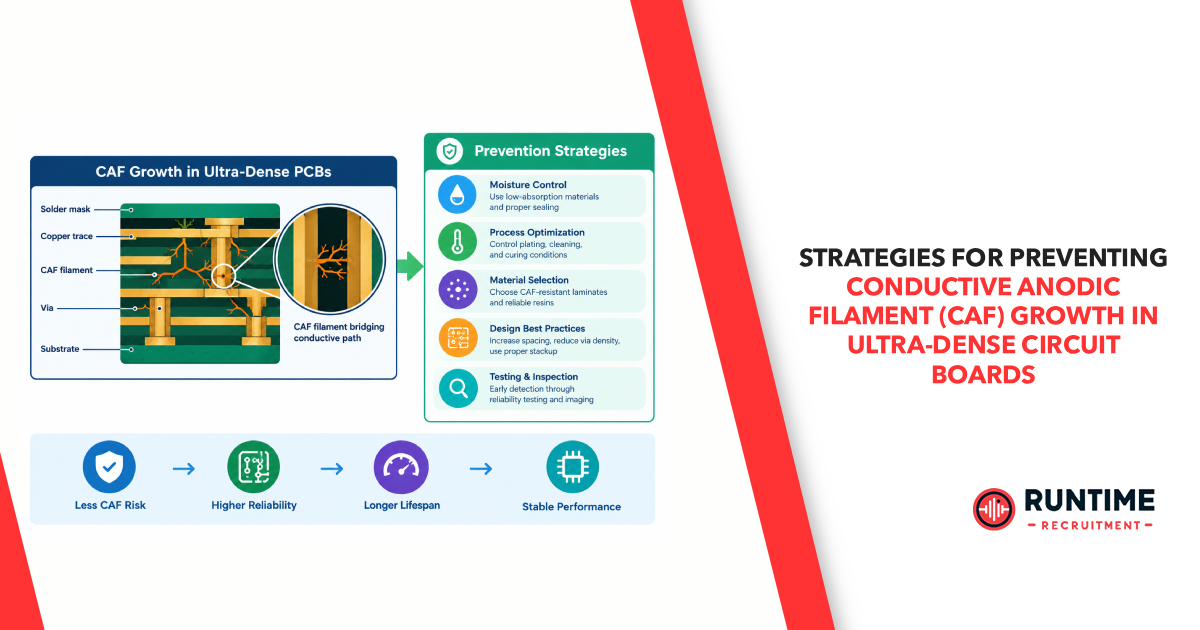
As embedded systems evolve toward higher performance, smaller form factors, and denser component integration, printed circuit board (PCB) architecture has undergone a radical transformation. High-Density Interconnect (HDI) technologies, fine-pitch ball grid arrays (BGAs), microvias, and multilayer stacks with tight clearances are now standard requirements for modern automotive, aerospace, industrial, and high-performance computing applications. However, this relentless pursuit of miniaturization introduces severe reliability challenges. Among the most insidious silent killers of ultra-dense hardware is Conductive Anodic Filament (CAF) growth. CAF is an electrochemical failure mechanism that creates internal short circuits within a PCB, often manifesting long after a device has been deployed in the field. For hardware and embedded systems engineers, understanding the root causes of CAF and implementing proactive mitigation strategies at the material, design, and manufacturing stages is paramount to ensuring long-term product reliability.

Read More >>
Addressing Power Integrity Degradation Driven by Fast Transient High-Core Current Demands
Technical21 October 2026

Addressing Power Integrity Degradation Driven by Fast Transient High-Core Current Demands

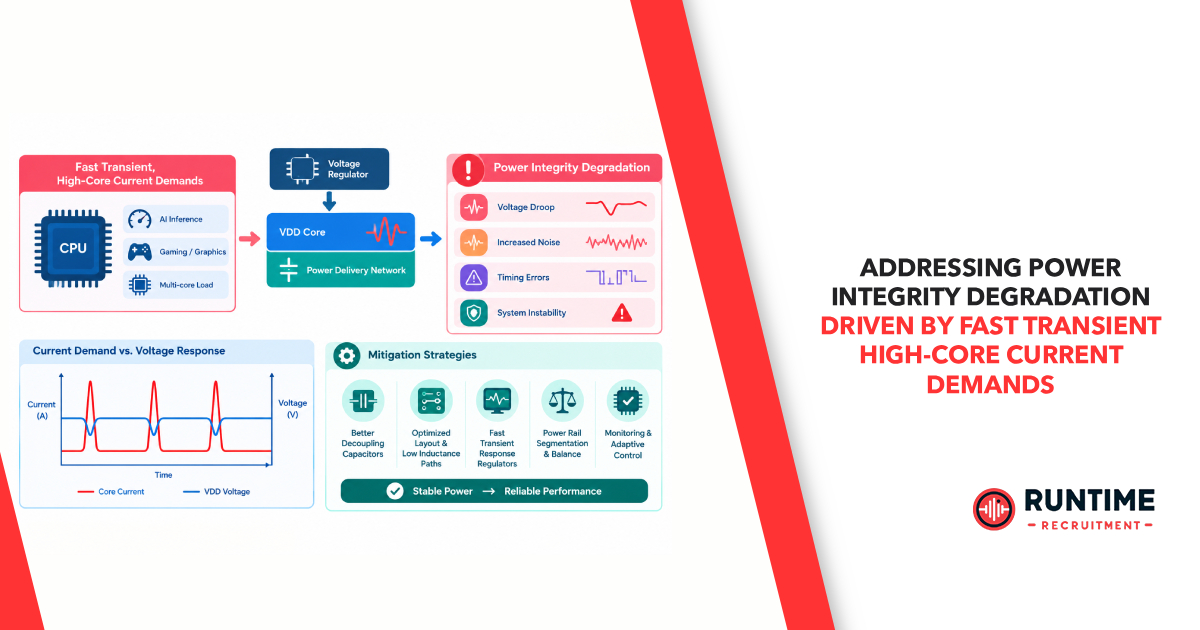
If you are an embedded hardware or systems engineer designing with modern sub-nanometer SoCs, high-density FPGAs, or multi-core application processors, you have likely encountered a terrifying phenomenon: a sudden, catastrophic system crash or silent data corruption triggered not by software bugs, but by a microscopic voltage dip. As semiconductor process nodes shrink to 3nm and below, operating voltages continue to plummet while core current demands skyrocket. Modern processing units can transition from deep idle states to full computational throttle in mere nanoseconds. This sudden surge in current demand, characterized by aggressive current change rates over time, wreaks havoc on traditional Power Distribution Networks (PDNs). Power integrity degradation is no longer a niche concern reserved for multi-gigabit server board designers; it is an everyday battleground for embedded engineers pushing the boundaries of edge computing, automotive ADCs, and high-speed communication hardware.

Read More >>
Overcoming Transient Response Lag in LDO Regulators for Dynamic Processor Cores
Technical20 October 2026

Overcoming Transient Response Lag in LDO Regulators for Dynamic Processor Cores

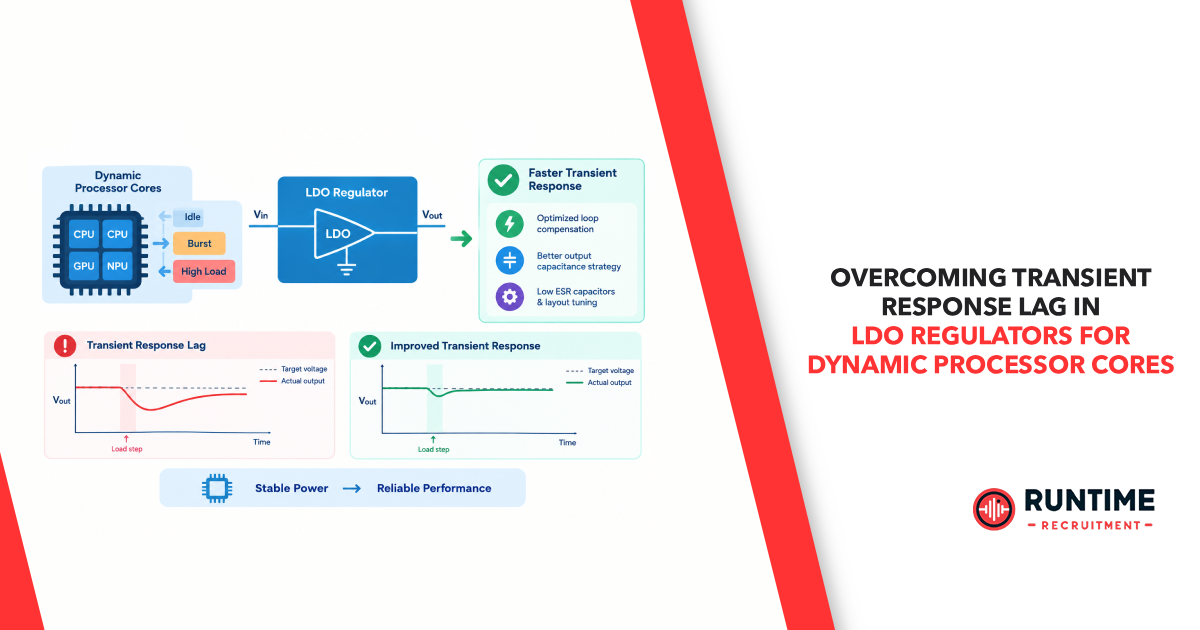
Modern embedded systems are marvels of computational efficiency. Whether powering edge-artificial intelligence accelerators, automotive domain controllers, or high-performance industrial IoT nodes, today's system-on-chips (SoCs) rely heavily on advanced Dynamic Voltage and Frequency Scaling (DVFS). By instantly scaling core voltages and clock frequencies down during idle periods and ramping them up during high-throughput execution, modern processor cores squeeze every microamp of efficiency out of their tight thermal and electrical power budgets. However, this relentless push toward performance and energy optimization introduces a formidable bottleneck right at the power delivery network (PDN): transient response lag. When a multi-core processor transitions from a low-power deep sleep state to a high-performance active execution state in a matter of nanoseconds, its current demand can jump from a few milliamps to several amps almost instantaneously.

Read More >>
Evaluating System Design: How to Test Architectural Thinking in 45 Minutes
Hiring16 October 2026

Evaluating System Design: How to Test Architectural Thinking in 45 Minutes

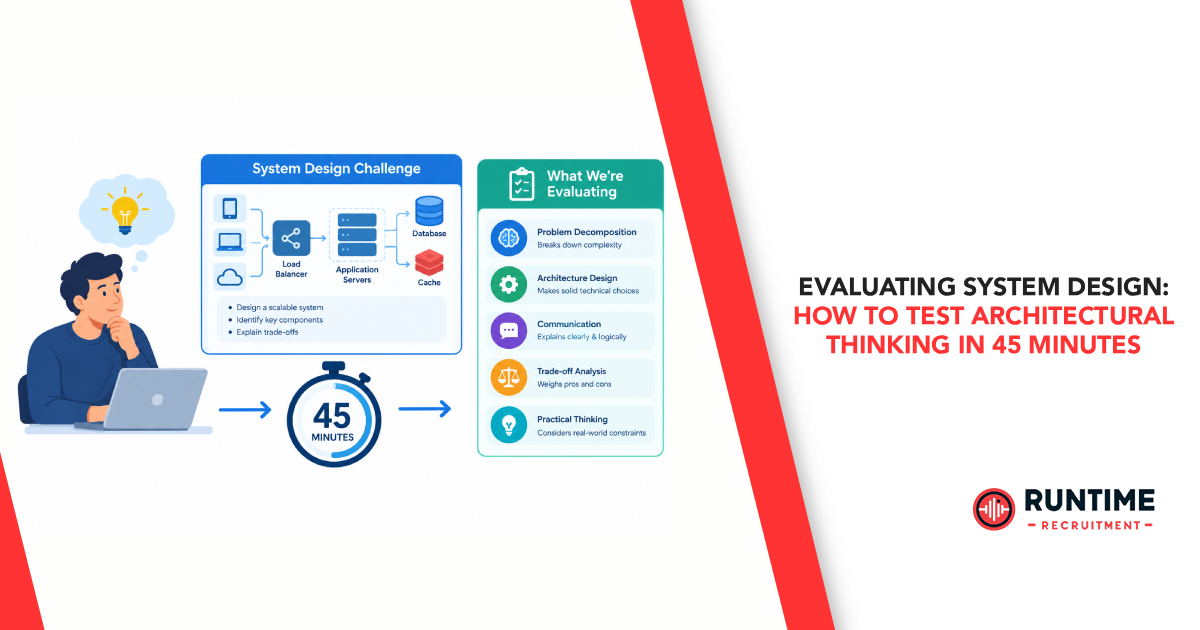
In the world of embedded engineering, code is only a fraction of the solution. The real magic — and the real risk — lies in architecture. Hardware choices, memory maps, power budgets, interrupt priorities, and real-time operating system (RTOS) task boundaries define the success or catastrophic failure of a product. Evaluating these skills in a compressed 45-minute interview window is daunting. How do you separate a candidate who has memorized design patterns from one who possesses genuine, battle-tested architectural intuition? This guide breaks down how to design and execute a high-signal, 45-minute embedded system design interview that cuts through the noise.

Read More >>
The CTO’s Dilemma: Buy, Build, or Rent Embedded System Competencies?
Technical13 October 2026

The CTO’s Dilemma: Buy, Build, or Rent Embedded System Competencies?

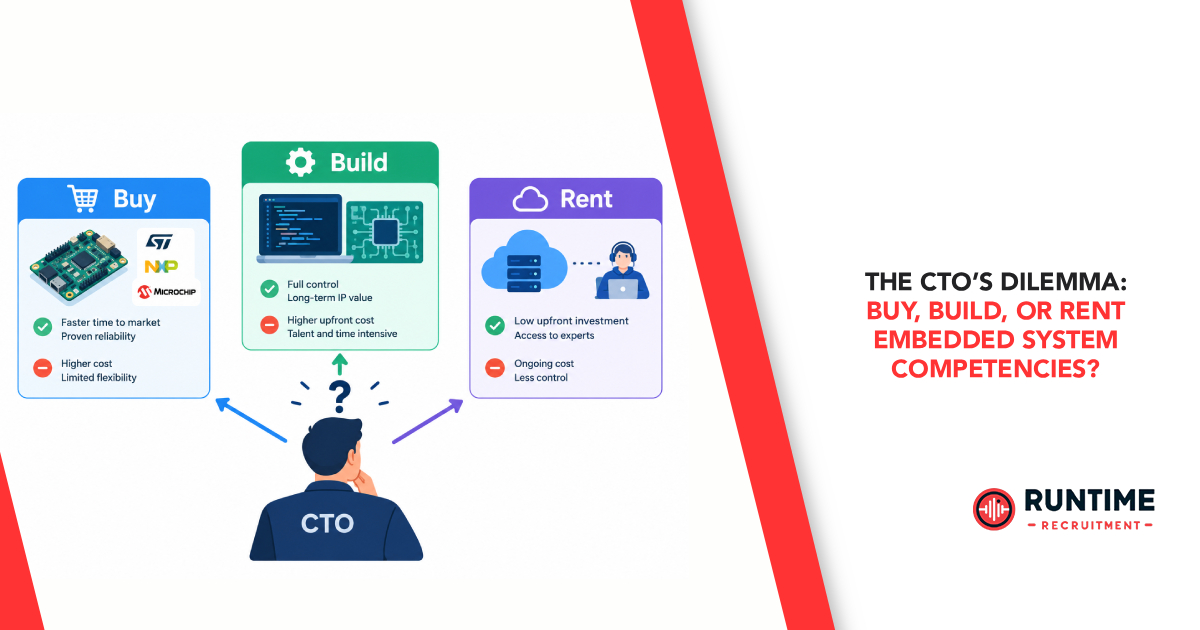
Modern embedded systems are sprawling, software-defined platforms. Today’s embedded engineering leaders are under pressure to deploy Edge AI models onto power-constrained silicon, build zero-trust security chains to satisfy strict mandates like the EU’s Cyber Resilience Act (CRA), and manage over-the-air (OTA) updates for long-lived device fleets. When market demands outpace internal capabilities, CTOs face a critical resource allocation question: How do we acquire the specialized embedded competencies required to ship on time without blowing up the engineering budget or taking on crushing technical debt? The decision comes down to three strategic levers: Build (hire and train internal talent), Buy (acquire COTS software/hardware or off-the-shelf IP), or Rent (engage specialized contractors, design houses, or staff augmentation partners). Choosing the wrong path can lead to delayed product launches, bloated payrolls, or brittle codebases that burn through capital.

Read More >>
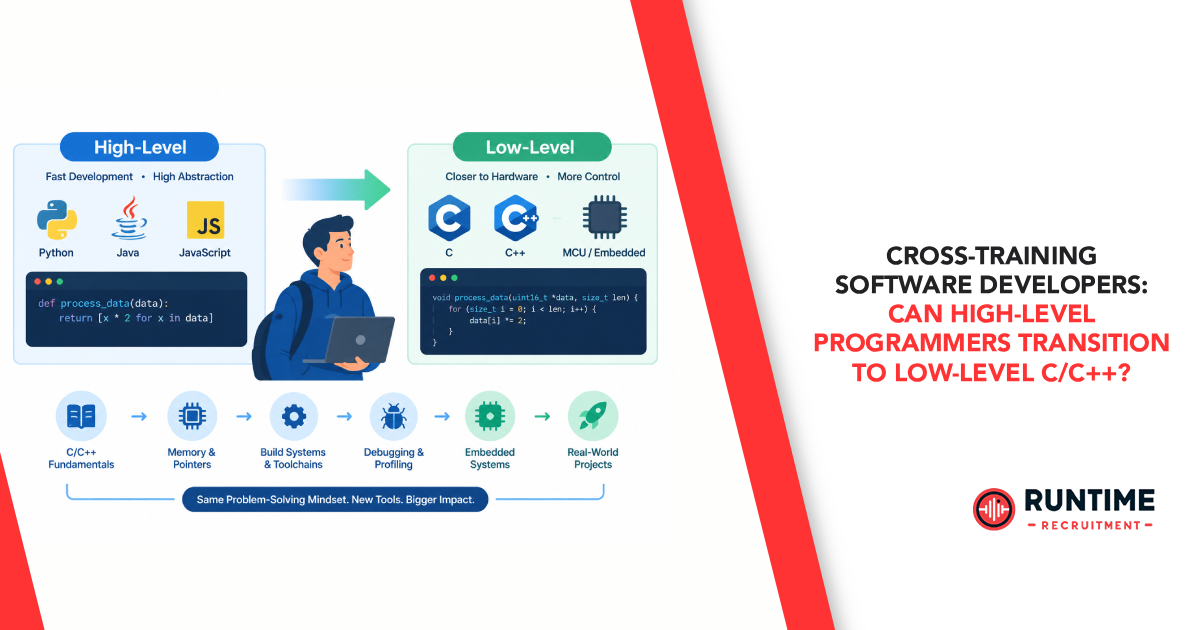
Cross-Training Software Developers: Can High-Level Programmers Transition to Low-Level C/C++?
Technical2 October 2026

Cross-Training Software Developers: Can High-Level Programmers Transition to Low-Level C/C++?

For years, the embedded engineering sector has operated behind a protective moat. Firmly walled off by hardware specifics, intricate register maps, custom toolchains, and strict real-time determinism, bare-metal and RTOS firmware engineering was considered a specialization that required a traditional electrical or computer engineering background. However, the rapid expansion of Edge AI, smart IoT infrastructure, connected automotive architectures, and advanced medical electronics has created an unprecedented demand for firmware talent. Engineering managers are facing an acute engineering talent shortage. The traditional candidate pipeline — graduates with deep backgrounds in microcontrollers, assembly, and C/C++ — is simply too narrow to keep up with product roadmaps.

Read More >>
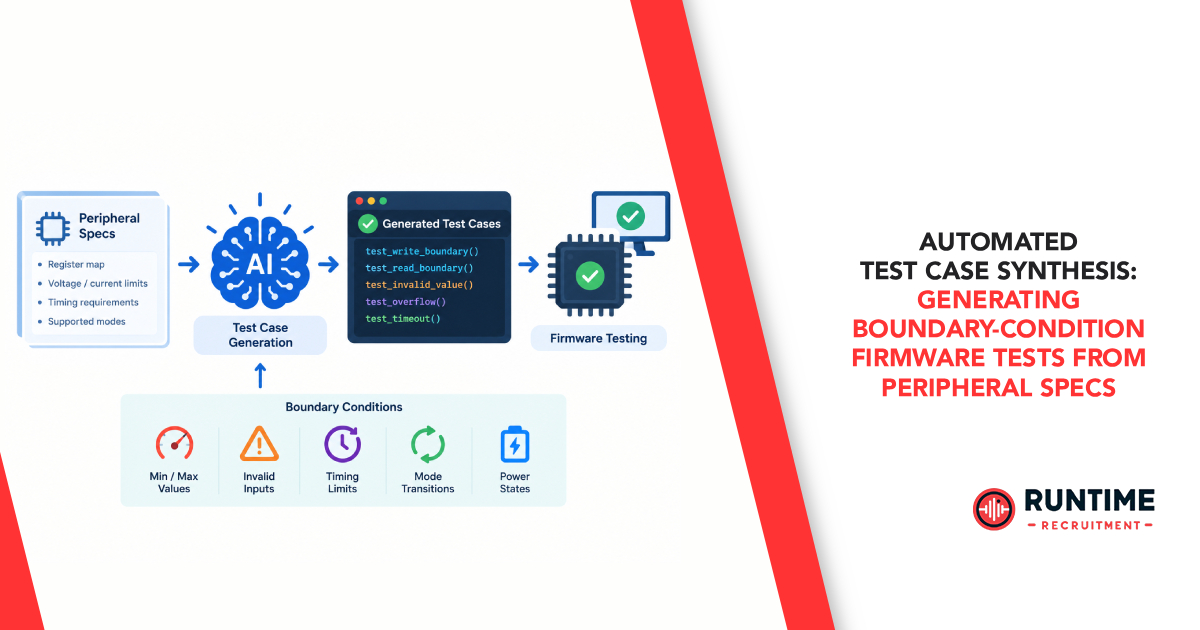
Automated Test Case Synthesis: Generating Boundary-Condition Firmware Tests from Peripheral Specs
Technical1 October 2026

Automated Test Case Synthesis: Generating Boundary-Condition Firmware Tests from Peripheral Specs

Firmware engineers spend significant time writing unit and integration tests to validate hardware abstraction layers (HALs) and low-level peripheral drivers. When bringing up a new microcontroller (MCU) or System-on-Chip (SoC), verifying that driver code handles register configurations, status flags, and hardware corner cases is often manual and incomplete. Manual test suites frequently cover happy paths — initializing a UART at 115200 baud, sending SPI frames, or triggering ADC conversions — while missing critical boundary conditions. What happens when an interrupt fires during a bit transition? What occurs when a DMA transfer count is loaded with zero, or a reserved bitfield is mutated during a read-modify-write operation?

Read More >>
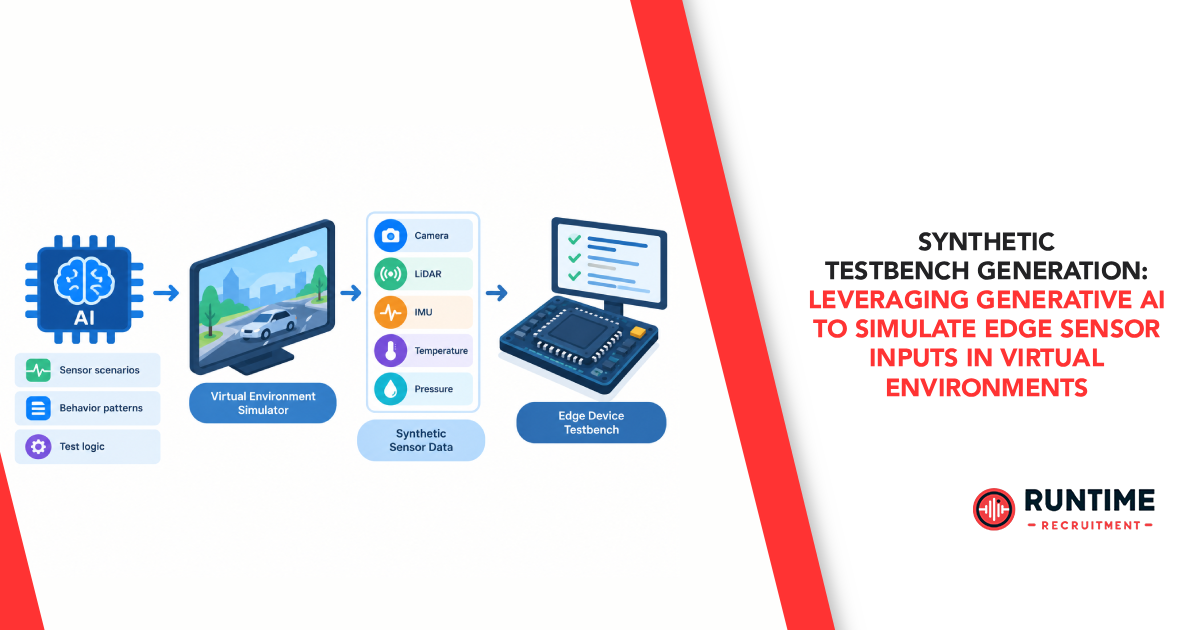
Synthetic Testbench Generation: Leveraging Generative AI to Simulate Edge Sensor Inputs in Virtual Environments
Technical28 September 2026

Synthetic Testbench Generation: Leveraging Generative AI to Simulate Edge Sensor Inputs in Virtual Environments

Embedded systems are transitioning from isolated controllers to highly autonomous edge nodes. Modern microcontrollers (MCUs), System-on-Chips (SoCs), and edge AI accelerators process dense streams of sensory telemetry — ranging from multi-axis MEMS inertial measurement units (IMUs) and optical sensors to Radar, LiDAR, and specialized bio-telemetry probes — in real time. As firmware complexity scales alongside heterogeneous hardware architectures, functional verification has emerged as the primary bottleneck in product development cycles. This gap has driven the adoption of Synthetic Testbench Generation powered by Generative AI. By training generative models on empirical sensor datasets, verification engineers can generate high-fidelity, physically consistent, and contextually rich sensory telemetry directly within virtual simulation environments. This article explores how generative architectures — ranging from Time-Series Generative Adversarial Networks (TimeGANs) to multi-agent sequence orchestrators — are integrated into SystemVerilog/UVM and SIL pipelines to revolutionize edge sensor simulation.

Read More >>
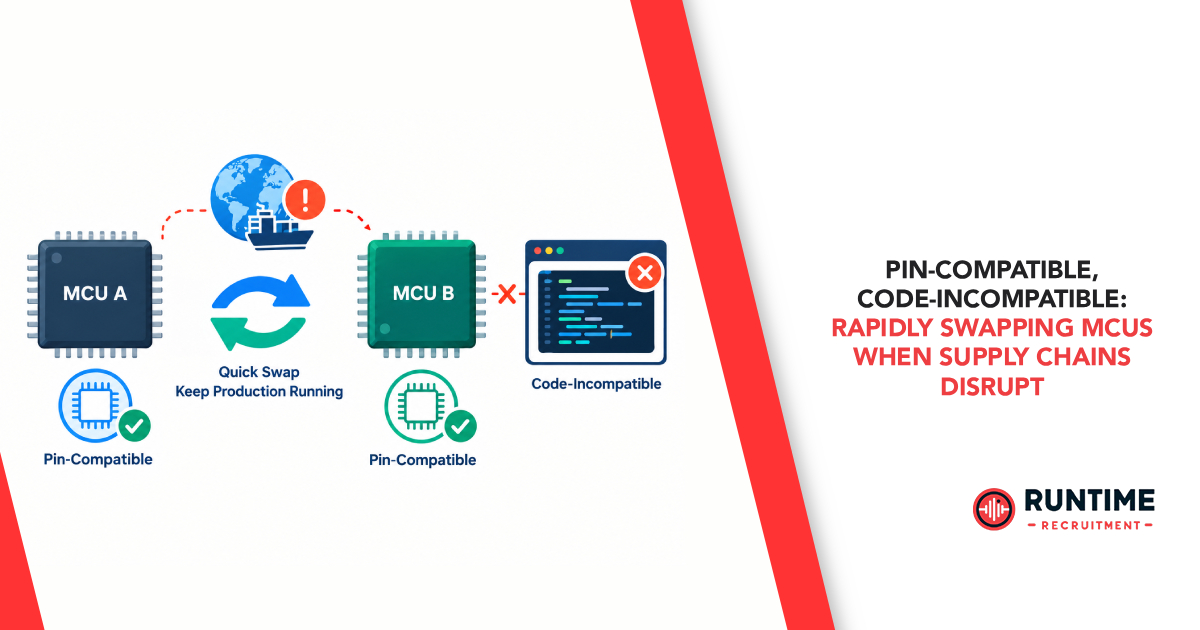
Pin-Compatible, Code-Incompatible: Rapidly Swapping MCUs When Supply Chains Disrupt
Technical25 September 2026

Pin-Compatible, Code-Incompatible: Rapidly Swapping MCUs When Supply Chains Disrupt

The embedded engineering landscape has experienced unprecedented supply chain volatility over recent years. Component lead times expanding beyond 52 weeks, sudden end-of-life (EOL) notifications, and cost spikes have turned component selection into a high-stakes gamble. When a primary microcontroller unit (MCU) becomes completely unobtainable, procurement teams frantically search for secondary sources. However, senior embedded engineers know the harsh reality: pin-compatible hardware is almost never code-compatible software.

Read More >>
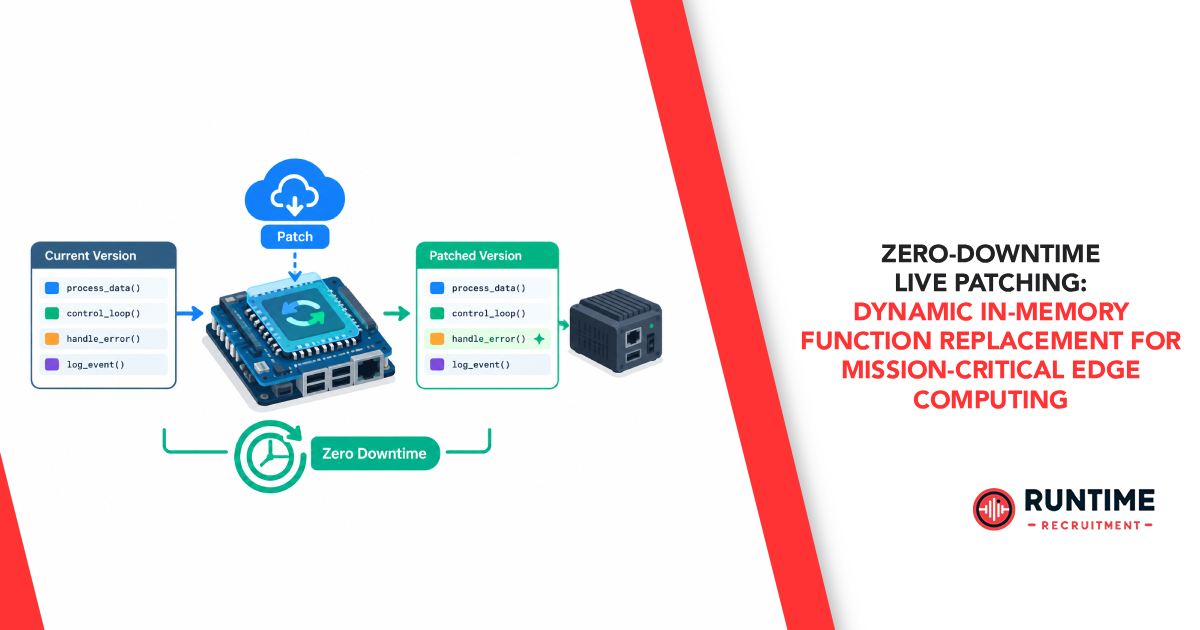
Zero-Downtime Live Patching: Dynamic In-Memory Function Replacement for Mission-Critical Edge Computing
Technical24 September 2026

Zero-Downtime Live Patching: Dynamic In-Memory Function Replacement for Mission-Critical Edge Computing

In autonomous robotics, automotive control units, grid-scale energy controllers, and subsea industrial gateways, system downtime carries high financial, operational, or safety consequences. When a security vulnerability (such as a buffer overflow in a network stack) or a critical edge logic bug is identified in a deployed MCU or edge node, the traditional remedy has been Over-The-Air (OTA) full firmware image updates.

Read More >>
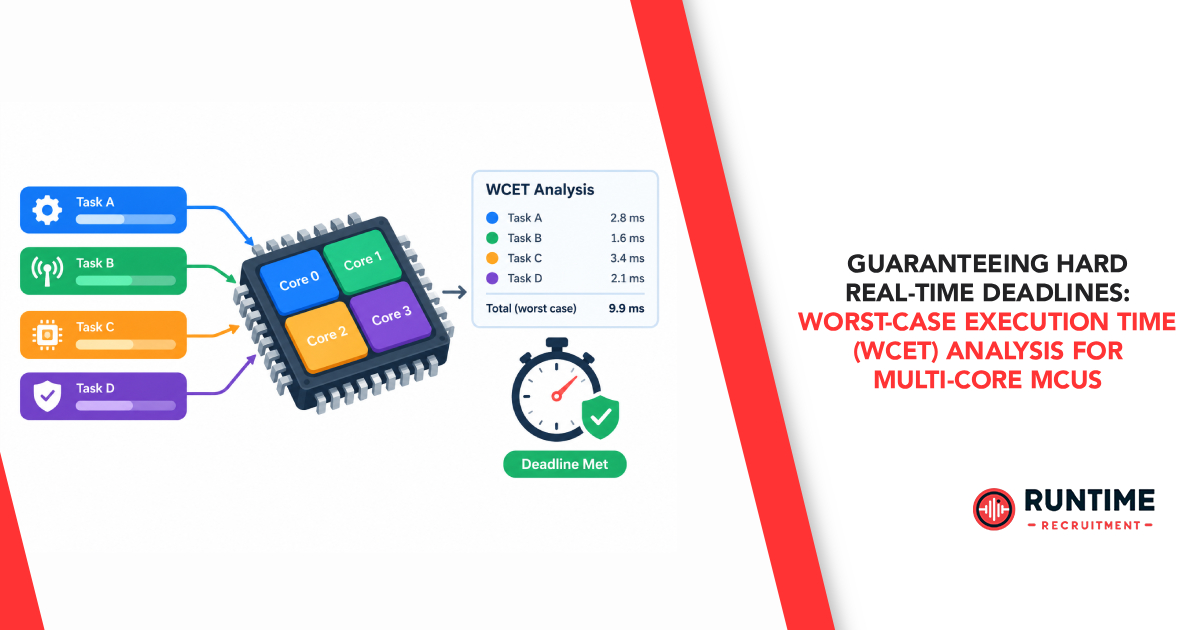
Guaranteeing Hard Real-Time Deadlines: Worst-Case Execution Time (WCET) Analysis for Multi-Core MCUs
Technical23 September 2026

Guaranteeing Hard Real-Time Deadlines: Worst-Case Execution Time (WCET) Analysis for Multi-Core MCUs

For decades, real-time embedded firmware developers relied on single-core microcontrollers (e.g., ARM Cortex-M3/M4, Classic AUTOSAR targets). Single-core topologies provided a predictable, straightforward execution environment: code executed sequentially, interrupts preempted tasks according to fixed priorities, and instruction timing was largely deterministic or boundable through straightforward static analysis. However, modern embedded systems demand unprecedented processing throughput. Requirements for advanced signal processing, machine learning at the edge, complex sensor fusion, and unified domain controllers have pushed silicon vendors to transition to multi-core microcontrollers (MCUs). Architectures like the dual-core ARM Cortex-M7/M4 (e.g., STMicroelectronics STM32H7), multi-core Cortex-R52 automotive processors, Infineon AURIX TC3xx/TC4xx TriCore devices, NXP S32K3, and multi-hart RISC-V platforms are now standard in high-performance embedded engineering. This transition introduces the Multi-Core Determinism Paradox: while multi-core processing vastly increases peak theoretical compute performance, it severely compromises execution predictability. When multiple processing cores concurrently access shared hardware resources—such as system buses, crossbar interconnects, shared SRAM, flash memory controllers, and peripheral blocks—they introduce non-deterministic contention delays.

Read More >>
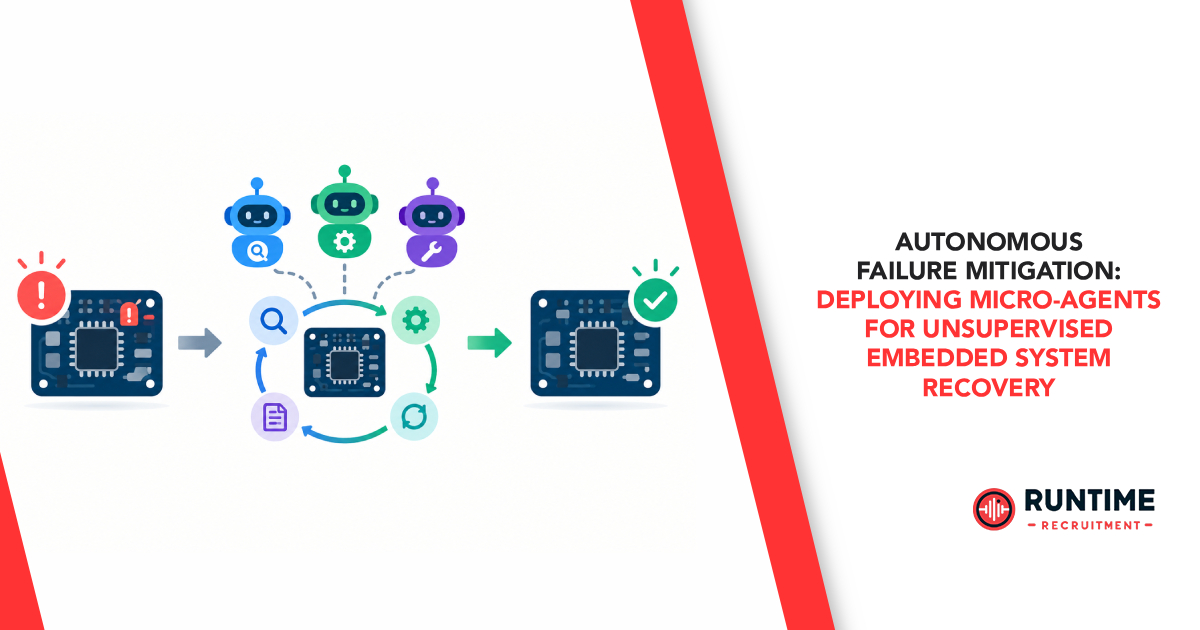
Autonomous Failure Mitigation: Deploying Micro-Agents for Unsupervised Embedded System Recovery
Technical15 September 2026

Autonomous Failure Mitigation: Deploying Micro-Agents for Unsupervised Embedded System Recovery

In simple microcontrollers, this “reboot-and-pray” approach was acceptable. Modern edge deployments — spanning autonomous automotive ADAS platforms, remote satellites, medical implants, and industrial IoT gateways — cannot afford brute-force restarts. A full system reboot introduces multi-second execution blackouts, drops critical network sessions, discards real-time sensor buffers, and risks locking devices into unrecoverable bootloops if corruption persists across flash memory. To achieve high availability in mission-critical edge devices, firmware architects are transitioning from reactive resets to Autonomous Failure Mitigation. By deploying lightweight, isolated Micro-Agents into the firmware architecture, embedded systems can monitor runtime integrity, isolate corrupt memory spaces, execute localized thread recycling, and perform surgical state recovery — all without interrupting the broader application or dropping hardware peripherals.

Read More >>
Algorithmic Power Attribution: Profiling Energy Consumption Across Individual Multi-Core MCU Tasks
Technical14 September 2026

Algorithmic Power Attribution: Profiling Energy Consumption Across Individual Multi-Core MCU Tasks

Multi-core microcontrollers (MCUs) — such as dual-core ARM Cortex-M33 architectures, asymmetric Cortex-M4 and Cortex-M0+ pairings, and multi-core RISC-V devices — have fundamentally reshaped modern embedded systems design. By decoupling real-time control loops from heavy mathematical compute, digital signal processing, or wireless protocol stacks, these multi-core silicon designs allow firmware developers to maximize execution throughput while scaling down dynamic operating frequency. However, this architectural leap introduces a major engineering hurdle: traditional energy profiling methods completely fall apart in multi-core environments. Consequently, macro-level energy measurements mask localized software inefficiencies. An energy-hungry spin-lock, an improperly duty-cycled hardware timer, an inefficient polling loop, or a cache-thrashing thread can easily hide within the baseline power footprint of an active secondary core. To achieve true energy optimization in modern firmware, engineering teams must move beyond global current measurement and adopt Algorithmic Power Attribution: the systematic decomposition of physical system current into discrete, task-level energy profiles across multiple concurrent processing cores.

Read More >>