Engineering Insights

Articles

433 articles on embedded systems, firmware, FPGA, and engineering recruitment.

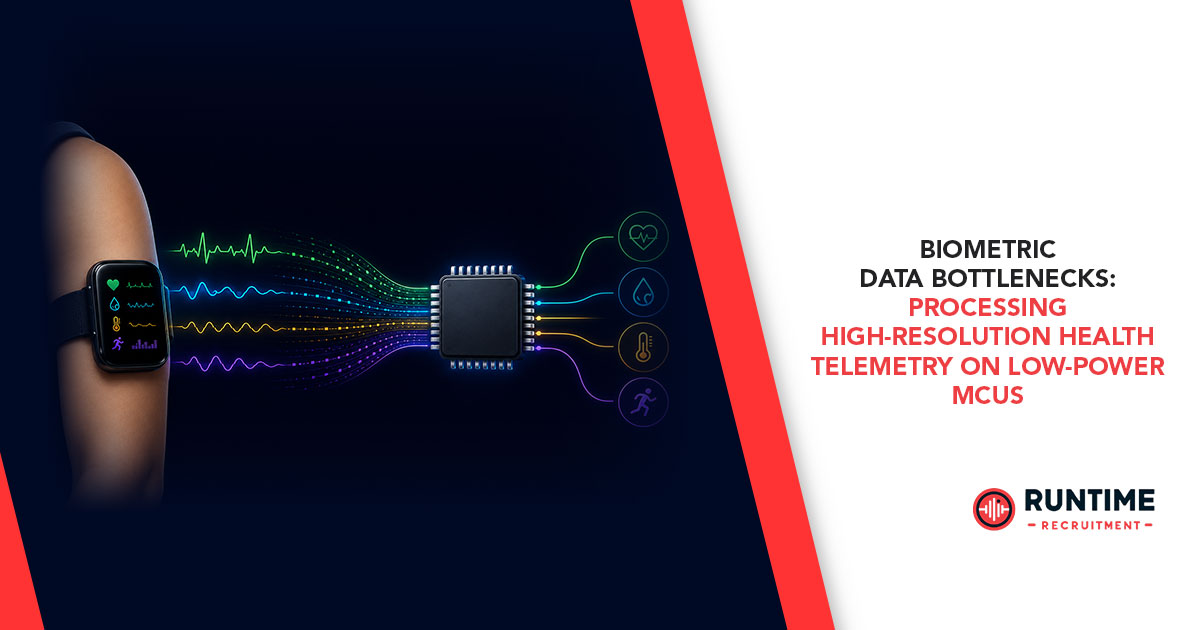
Biometric Data Bottlenecks: Processing High-Resolution Health Telemetry on Low-Power MCUs
Technical20 July 2026

Biometric Data Bottlenecks: Processing High-Resolution Health Telemetry on Low-Power MCUs

The demand for wearable medical devices, continuous health monitors, and remote patient telemetry systems is exploding. Modern clinical-grade wearables are no longer just counting steps; they are tasked with tracking multi-lead electrocardiograms (ECG), photoplethysmography (PPG) pulse oximetry, photoplethysmogram-derived blood pressure, bioimpedance spectroscopy, and multi-axis inertial data simultaneously. For the embedded systems engineer, this introduces a brutal engineering paradox. Healthcare providers and ML-driven diagnostic platforms demand high-resolution, uncompressed, high-frequency telemetry to detect subtle cardiac anomalies or neurological tremors. Simultaneously, end-users and product managers demand weeks of battery life out of a sleek, ultra-compact form factor.

Read More >>
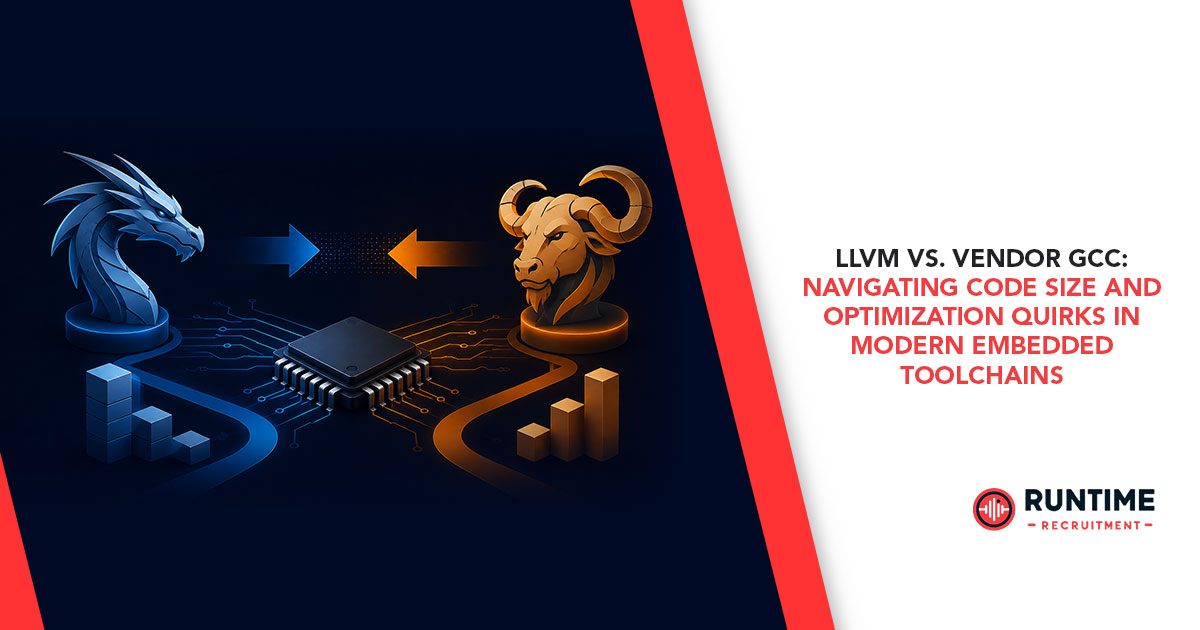
LLVM vs. Vendor GCC: Navigating Code Size and Optimization Quirks in Modern Embedded Toolchains
Technical17 July 2026

LLVM vs. Vendor GCC: Navigating Code Size and Optimization Quirks in Modern Embedded Toolchains

For decades, the GNU Compiler Collection (GCC) has been the bedrock of embedded systems development. Hardware vendors routinely distribute tailored GCC forks to support their proprietary silicon architectures, specialized instruction sets, and peripheral libraries. However, the LLVM/Clang infrastructure has matured into a formidable alternative, powering commercial toolchains like Arm Compiler 6 (AC6) and gaining native adoption across major open-source embedded ecosystems. For embedded software engineers, choosing between a vendor-supplied GCC toolchain and a modern LLVM-based pipeline is no longer just an academic debate. It is a critical architectural decision that directly influences binary footprint size, execution deterministic behavior, boot times, and hardware bill-of-materials (BOM) costs.

Read More >>
High-Fidelity Haptics: Taming Actuator Ringing and Jitter in Next-Gen Wearables
Technical16 July 2026

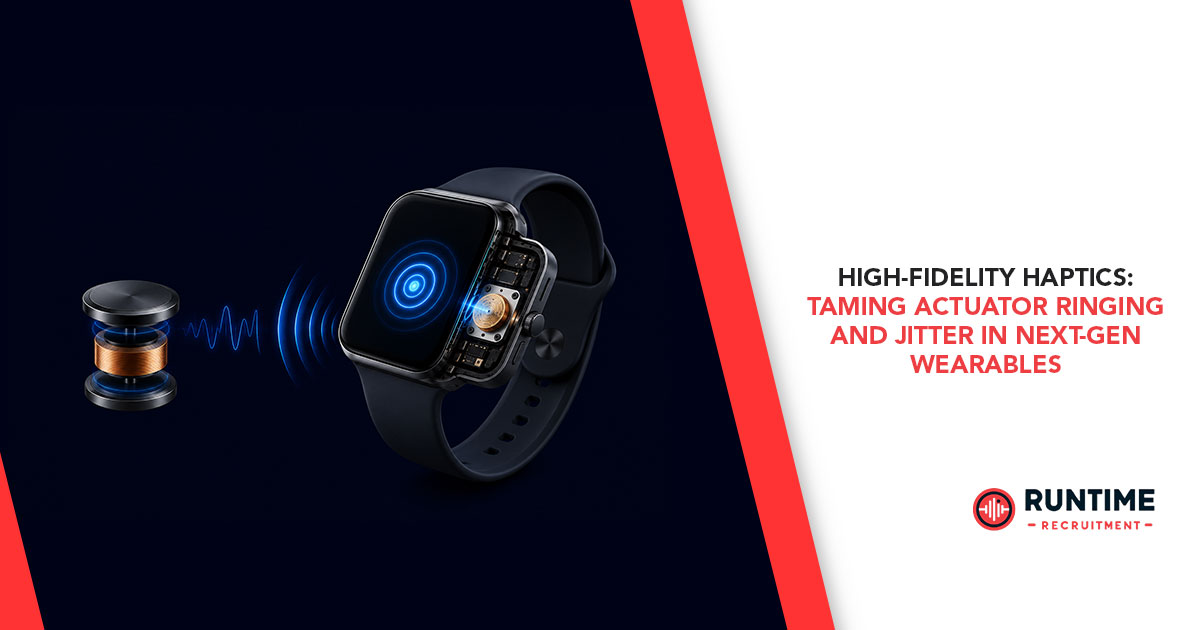
High-Fidelity Haptics: Taming Actuator Ringing and Jitter in Next-Gen Wearables

The expectations for wearable device haptics have fundamentally changed. We have moved far beyond the era of crude, monotonous buzzes used purely for basic notifications. Today’s next-generation wearables—ranging from advanced medical monitors and immersive AR/VR controllers to sophisticated smartwatches, demand high-fidelity tactile feedback. Modern user interfaces require haptic subsystems to simulate complex textures, render crisp button clicks, track real-time biometrics, and provide nuanced spatial awareness. For the embedded systems engineer, delivering this level of fidelity presents a steep physical and algorithmic challenge. At the heart of high-fidelity haptics lies a difficult engineering paradox: how do you achieve rapid, high-acceleration tactile transitions using mechanical components that are inherently prone to resonance, inertia, and latency?

Read More >>
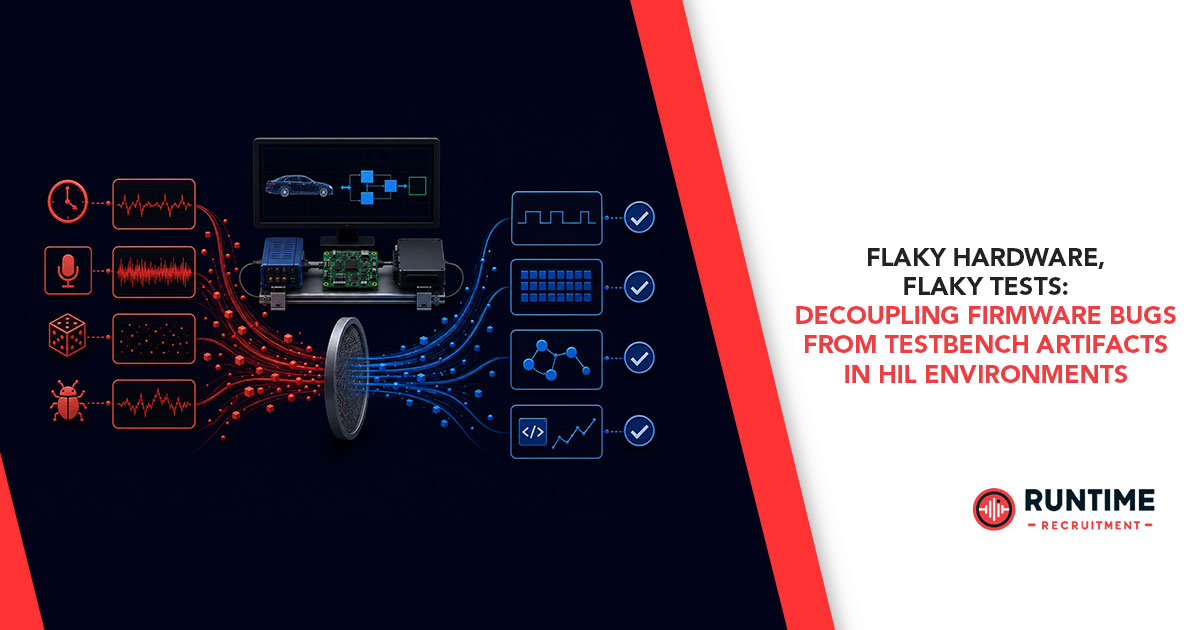
Flaky Hardware, Flaky Tests: Decoupling Firmware Bugs from Testbench Artifacts in HIL Environments
Technical15 July 2026

Flaky Hardware, Flaky Tests: Decoupling Firmware Bugs from Testbench Artifacts in HIL Environments

In complex embedded systems across automotive, aerospace, medical, and industrial automation fields, HIL testing is the gold standard for validation. However, because HIL sits at the volatile intersection of physical instrumentation, simulated environments, and target execution hardware, it is uniquely prone to non-deterministic failures. When a test fails intermittently, distinguishing between a legitimate firmware bug and a testbench artifact can consume days of development time. Decoupling these two domains requires a deep understanding of the physical and architectural vectors that introduce flakiness into HIL environments, along with a systematic framework for triage.

Read More >>
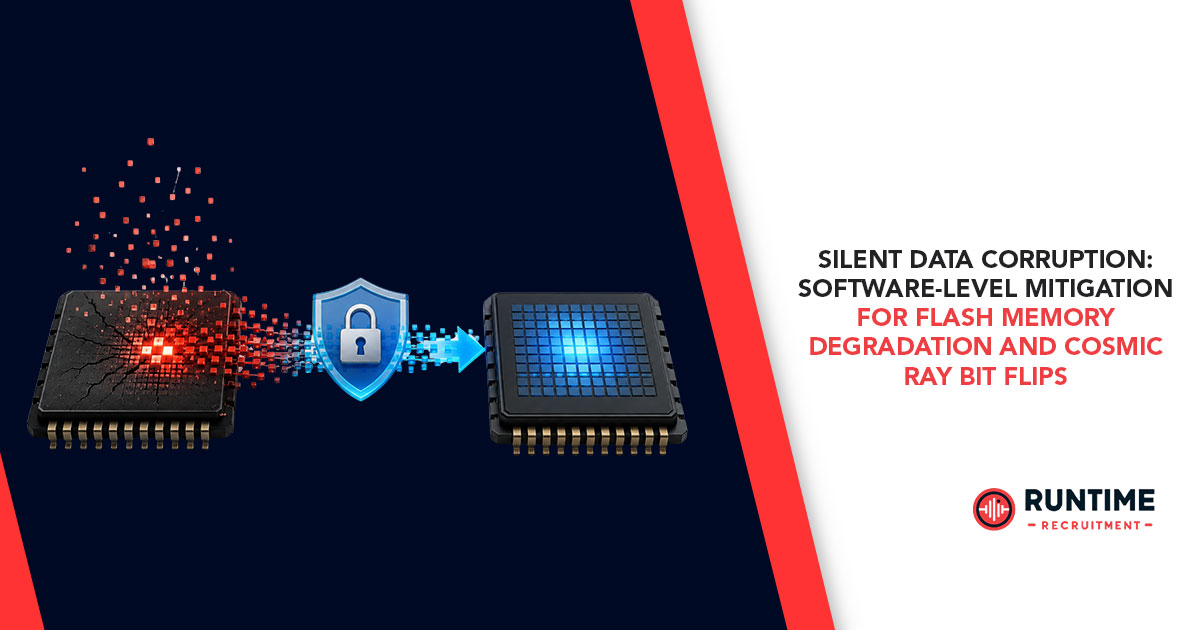
Silent Data Corruption: Software-Level Mitigation for Flash Memory Degradation and Cosmic Ray Bit Flips
Technical14 July 2026

Silent Data Corruption: Software-Level Mitigation for Flash Memory Degradation and Cosmic Ray Bit Flips

For embedded engineers developing safety-critical, industrial, or high-reliability systems, data integrity is paramount. While hard crashes and unbootable states are disruptive, they are deterministic; they flag a failure that can be caught by watchdogs or diagnostic routines. Far more insidious is Silent Data Corruption (SDC). As silicon geometries shrink to sub-10nm nodes and multi-level cell technologies increase storage densities, the vulnerability of embedded systems to SDC escalates exponentially. Relying solely on hardware-level protections is no longer sufficient.

Read More >>
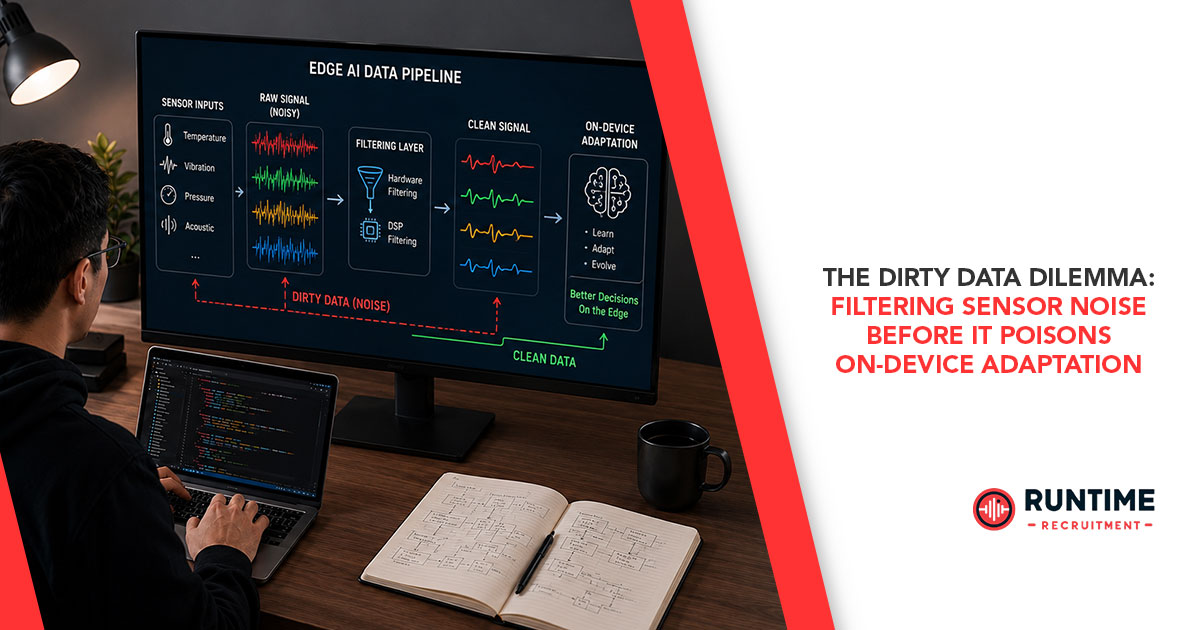
The Dirty Data Dilemma: Filtering Sensor Noise Before It Poisons On-Device Adaptation
Technical13 July 2026

The Dirty Data Dilemma: Filtering Sensor Noise Before It Poisons On-Device Adaptation

The promise of Edge AI is no longer simply about running static, pre-trained machine learning models on resource-constrained devices. The technological frontier has shifted drastically toward on-device adaptation: embedded systems that actively learn, calibrate, and evolve based on their deployment environments without requiring a costly round-trip to the cloud. From predictive maintenance sensors strapped to heavy industrial machinery to autonomous navigational modules, the ability to adapt natively at the edge is a revolutionary leap. When an embedded system learns continuously from its environment, it is entirely at the mercy of the sensors feeding it. If those hardware sensors capture electrical noise, environmental glitches, or transient errors, the on-device model is not merely making a bad prediction; it is actively internalizing bad behavior. Filtering sensor noise before it poisons these adaptive models is arguably the most pressing challenge in modern embedded engineering, standing at the intersection of hardware design, digital signal processing, and machine learning.

Read More >>
Claude Thinks, Codex Types: How I Build and Debug Apps With Two AIs
Technical9 July 2026

Claude Thinks, Codex Types: How I Build and Debug Apps With Two AIs

I don't write much code by hand anymore. Not because I can't. I've spent about 25 years around electronics and software. It's because I found a division of labour between two AI models that ships working software faster than I can type, and I want to walk through exactly how it works. The short version: one model plans and reviews, the other writes the code, and a small piece of custom plumbing connects them. The interesting part isn't the idea. It's the two or three unglamorous lessons that took the setup from "impressive demo" to "actually usable every day."

Read More >>
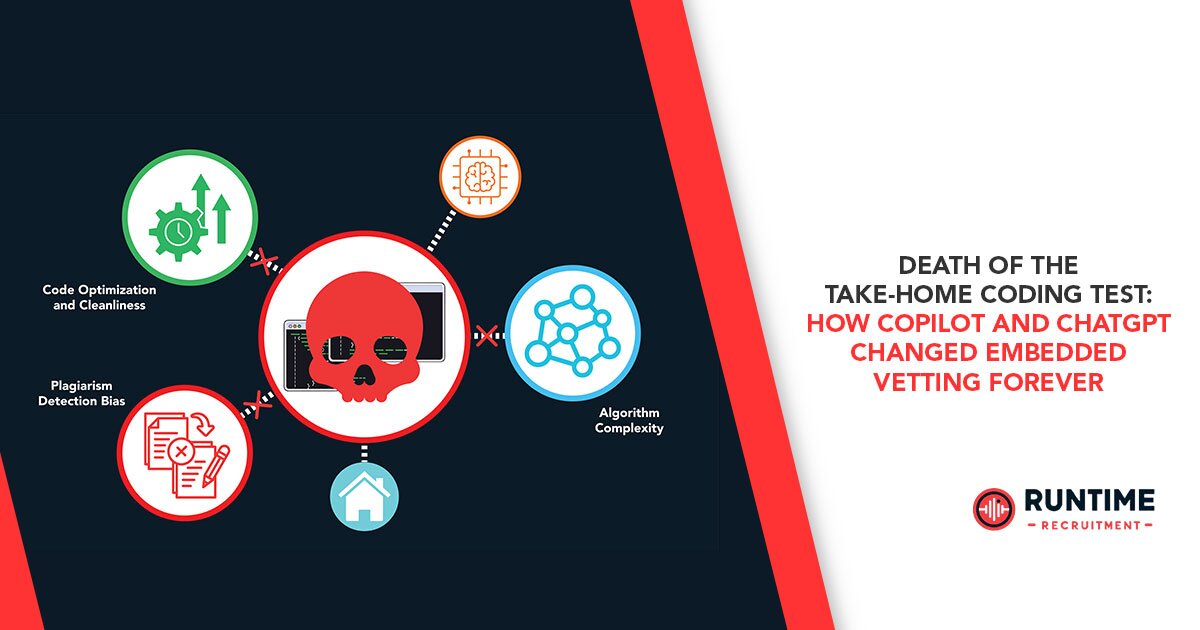
Death of the Take-Home Coding Test: How Copilot and ChatGPT Changed Embedded Vetting Forever
Technical8 July 2026

Death of the Take-Home Coding Test: How Copilot and ChatGPT Changed Embedded Vetting Forever

The traditional technical hiring pipeline for embedded systems engineers is broken. For over a decade, the take-home coding assignment stood as the gatekeeper of technical competence. Engineering managers would hand out a specification: perhaps implementing a ring buffer, configuring a UART driver state machine, or writing a bare-metal task scheduler, and grant candidates a weekend to prove their worth. The era of evaluating an embedded engineer by their ability to write boilerplate driver code in isolation is officially dead. This article explores why the take-home coding test collapsed, how Generative AI exploits traditional testing models, and how forward-thinking engineering firms must adapt to vet talent effectively in an AI-saturated world.

Read More >>
AI Coding Is Powerful. But Only If You Still Know How to Engineer.
Technical6 July 2026

AI Coding Is Powerful. But Only If You Still Know How to Engineer.

AI is changing software development quickly. There is no serious argument against that anymore. Anyone who has spent real time with modern coding models can see the productivity gains. Used properly, they can accelerate refactoring, generate boilerplate, help review code, explain unfamiliar codebases, write tests, document systems, and speed up the movement from idea to implementation. But there is a dangerous misunderstanding spreading through the industry. AI does not remove the need for engineering judgement. It amplifies the engineer using it. If the person driving the model does not understand architecture, requirements, trade-offs, failure modes, security, performance, deployment, and maintainability, the model will not magically compensate for that weakness. In many cases, it will make the problem worse because it can produce convincing output at high speed. Bad engineering, generated faster, is still bad engineering.

Read More >>
The Great Transition: Identifying Mid-Level Engineers Ready to Step Into Senior Architectural Roles
General5 June 2026

The Great Transition: Identifying Mid-Level Engineers Ready to Step Into Senior Architectural Roles

The embedded engineering landscape is facing a profound bottleneck. As technologies like Edge AI, advanced industrial automation, and connected IoT devices proliferate, the demand for sophisticated hardware-software co-design has never been higher. Yet, while there is a steady pipeline of junior and mid-level engineers capable of writing solid firmware, there is a critical shortage of [...]

Read More >>
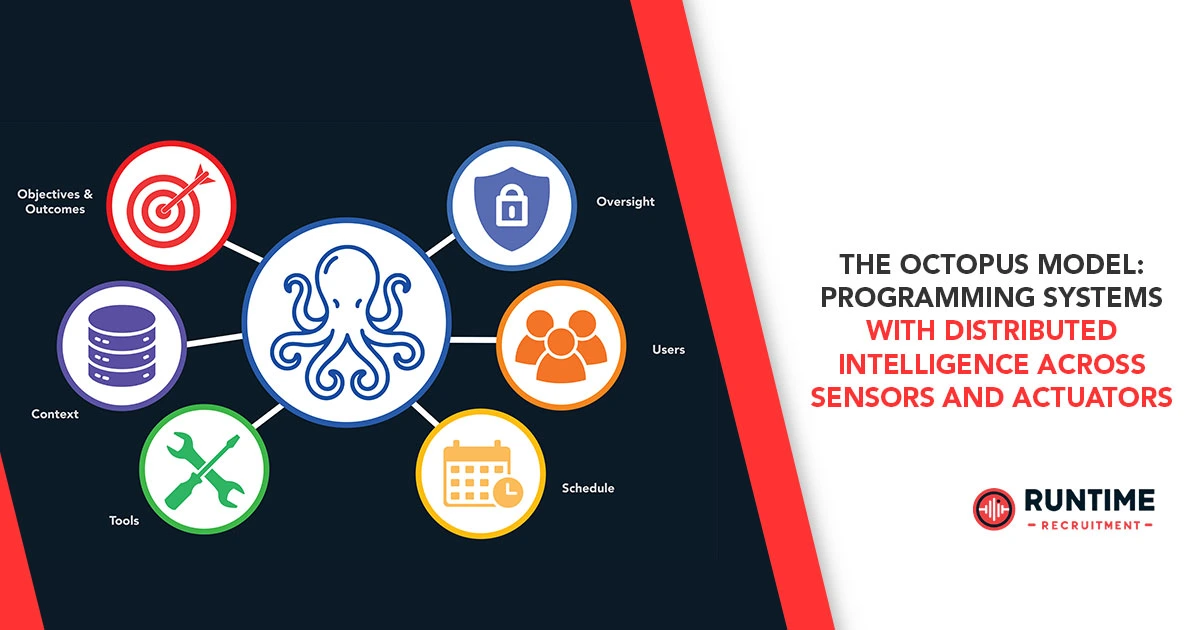
The Octopus Model: Programming Systems with Distributed Intelligence across Sensors and Actuators
General4 June 2026

The Octopus Model: Programming Systems with Distributed Intelligence across Sensors and Actuators

For decades, the standard architectural approach in embedded systems engineering has mirrored traditional corporate hierarchies: a powerful, centralized processing unit dictates the actions of numerous “dumb” peripherals. In this model, a central Microcontroller Unit (MCU) or Microprocessor Unit (MPU) constantly polls sensors, ingests raw data, runs the core algorithms, and explicitly commands actuators. While this [...]

Read More >>
The Cyber Resilience Act (CRA): Mandatory Security Standards for Edge AI Firmware
General22 May 2026

The Cyber Resilience Act (CRA): Mandatory Security Standards for Edge AI Firmware

The era of “best-effort” security in the embedded world is officially over. For years, firmware developers and AI engineers have operated in a landscape where security was often a “nice-to-have” feature, frequently sacrificed at the altar of time-to-market or computational efficiency. The European Union’s Cyber Resilience Act (CRA), which entered into force in late 2024, [...]

Read More >>
The Resilient Edge: Architecting Self-Healing Firmware for Autonomous AI Rollbacks
General19 May 2026

The Resilient Edge: Architecting Self-Healing Firmware for Autonomous AI Rollbacks

The proliferation of Edge AI has fundamentally transformed how we interact with the physical world. From predictive maintenance sensors on industrial factory floors to advanced biometric access control systems, pushing machine learning models to the absolute edge offers undeniable advantages. It drastically reduces latency, eliminates the need for constant high-bandwidth cloud connectivity, and inherently bolsters [...]

Read More >>
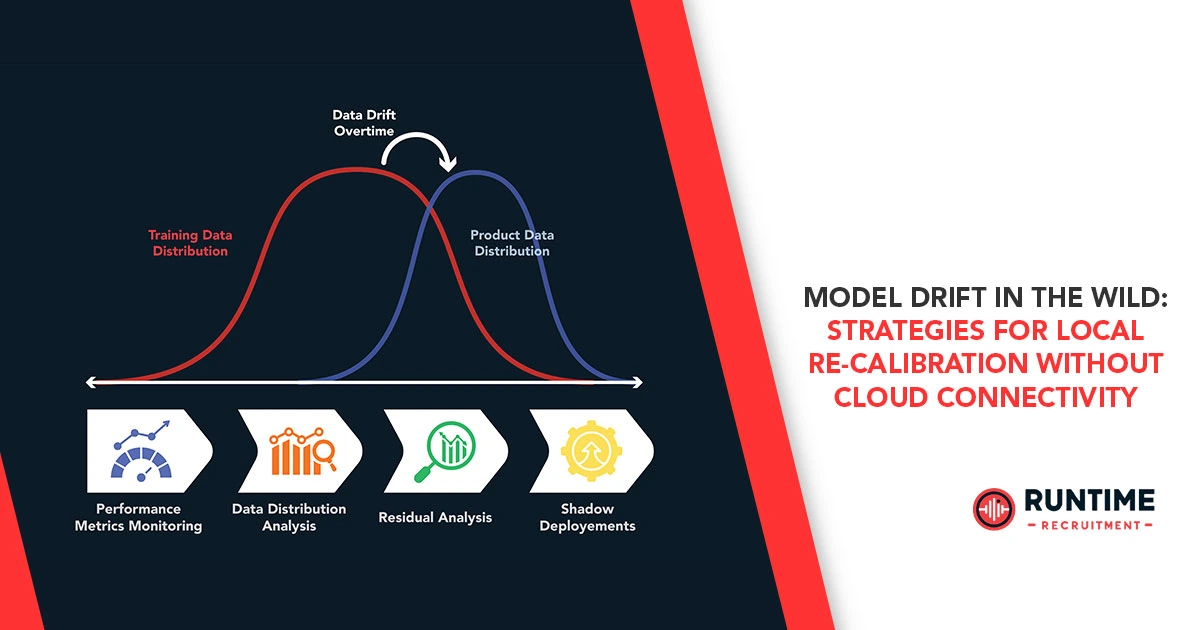
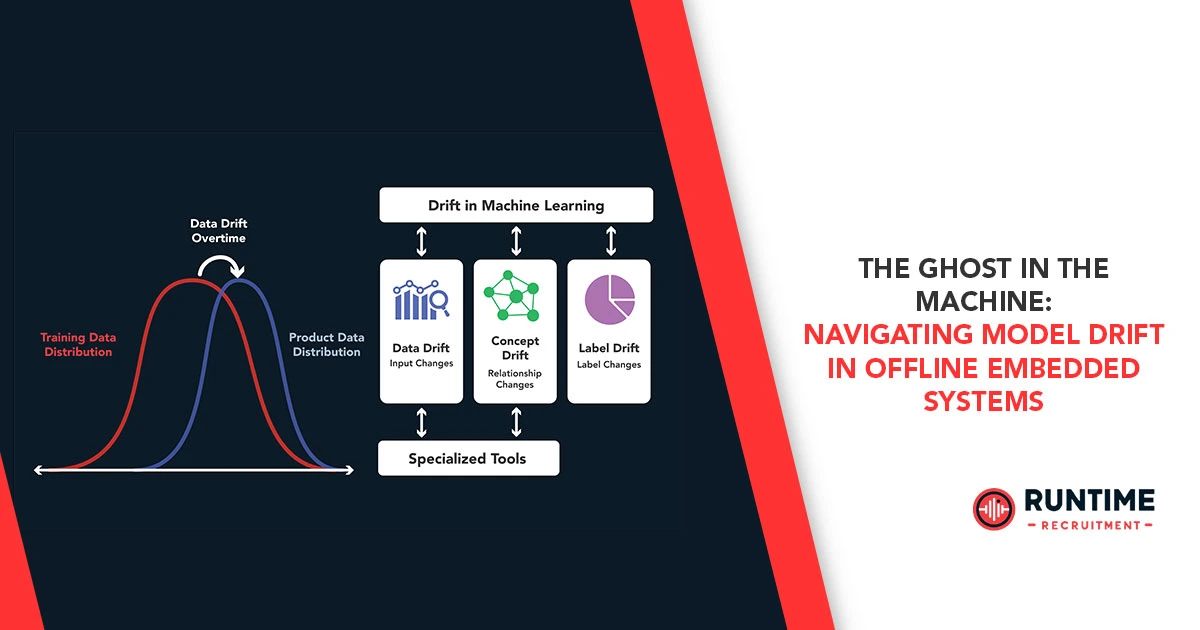
The Ghost in the Machine: Navigating Model Drift in Offline Embedded Systems
General15 May 2026

The Ghost in the Machine: Navigating Model Drift in Offline Embedded Systems

In the controlled environment of a laboratory or a high-performance computing cluster, Machine Learning (ML) models are masterpieces of mathematical precision. We feed them curated datasets, tune their hyperparameters until the loss curves flatten, and achieve validation accuracies that inspire confidence. However, for the embedded engineer, the deployment of an ML model is not the [...]

Read More >>
Simple XAI for Embedded Engineers to Understand “Why” Your Model Misclassified
General23 April 2026

Simple XAI for Embedded Engineers to Understand “Why” Your Model Misclassified

In the world of embedded systems, where milliseconds matter and resources are often scarce, the allure of powerful AI and Machine Learning (ML) models is undeniable. From predictive maintenance on factory floors to real-time object detection in autonomous vehicles, these “black box” models offer unprecedented capabilities. Yet, for the embedded engineer meticulously crafting robust and [...]

Read More >>
The Passive Power Play: How to Sell Your Embedded Engineering Role to Candidates Who Aren't Looking
General16 April 2026

The Passive Power Play: How to Sell Your Embedded Engineering Role to Candidates Who Aren't Looking

The embedded engineering talent market is an arena of high demand and scarcity. The most skilled professionals, the experts capable of mastering low-level C/C++ code, wrestling with hardware constraints, optimizing RTOS performance, and delivering robust, real-time solutions, are rarely scrolling through job boards. They are, by definition, passive candidates: currently employed, successful, and not actively [...]

Read More >>
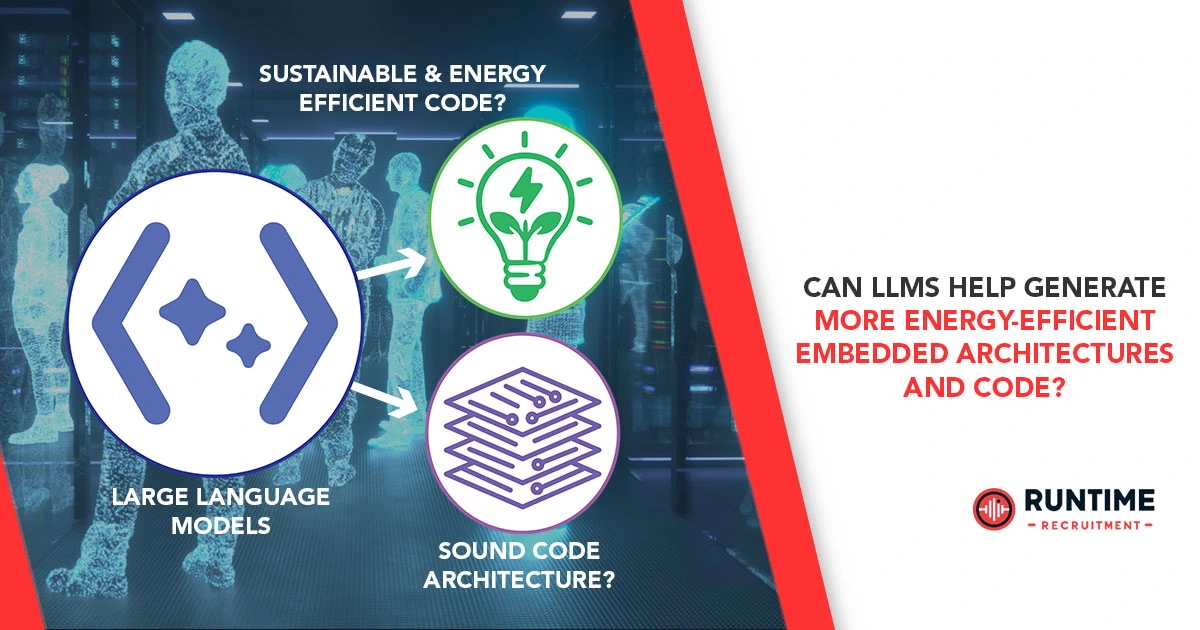
Can LLMs Help Generate More Energy-Efficient Embedded Architectures and Code?
General25 March 2026

Can LLMs Help Generate More Energy-Efficient Embedded Architectures and Code?

The embedded world, long driven by the relentless pursuit of smaller, faster, and cheaper, is now facing a new imperative: greener. As our connected devices proliferate, from smart home sensors to industrial IoT giants, the cumulative energy consumption of embedded systems is becoming a significant concern. The push for sustainability isn't just an ethical one; [...]

Read More >>
How Embedded Analytics is Redefining Predictive Maintenance, Maximizing Lifecycles, and Tackling E-Waste
General18 March 2026

How Embedded Analytics is Redefining Predictive Maintenance, Maximizing Lifecycles, and Tackling E-Waste

The paradigm of industrial and consumer product maintenance is undergoing a profound shift, driven by a convergence of capabilities that places sophisticated intelligence directly at the point of action. For decades, the standard operating procedure has oscillated between reactive “run-to-failure”, a costly strategy guaranteeing unscheduled downtime, and preventive maintenance, a time-based approach that frequently results [...]

Read More >>
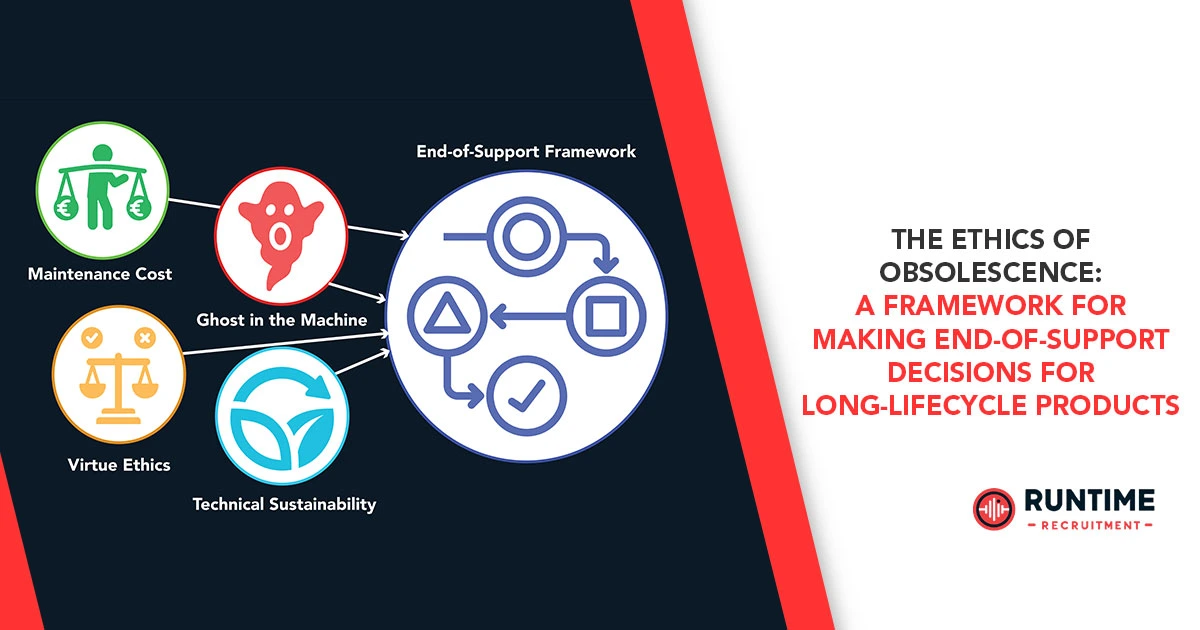
The Ethics of Obsolescence: A Framework for Making End-of-Support Decisions for Long-Lifecycle Products
General10 March 2026

The Ethics of Obsolescence: A Framework for Making End-of-Support Decisions for Long-Lifecycle Products

In the world of consumer electronics, “planned obsolescence” is often viewed as a cynical marketing ploy—a way to force a smartphone upgrade every twenty-four months. But for the embedded engineer, obsolescence isn't a marketing strategy; it’s a relentless, creeping technical reality. We don't build apps that live in the cloud; we build firmware that lives [...]

Read More >>
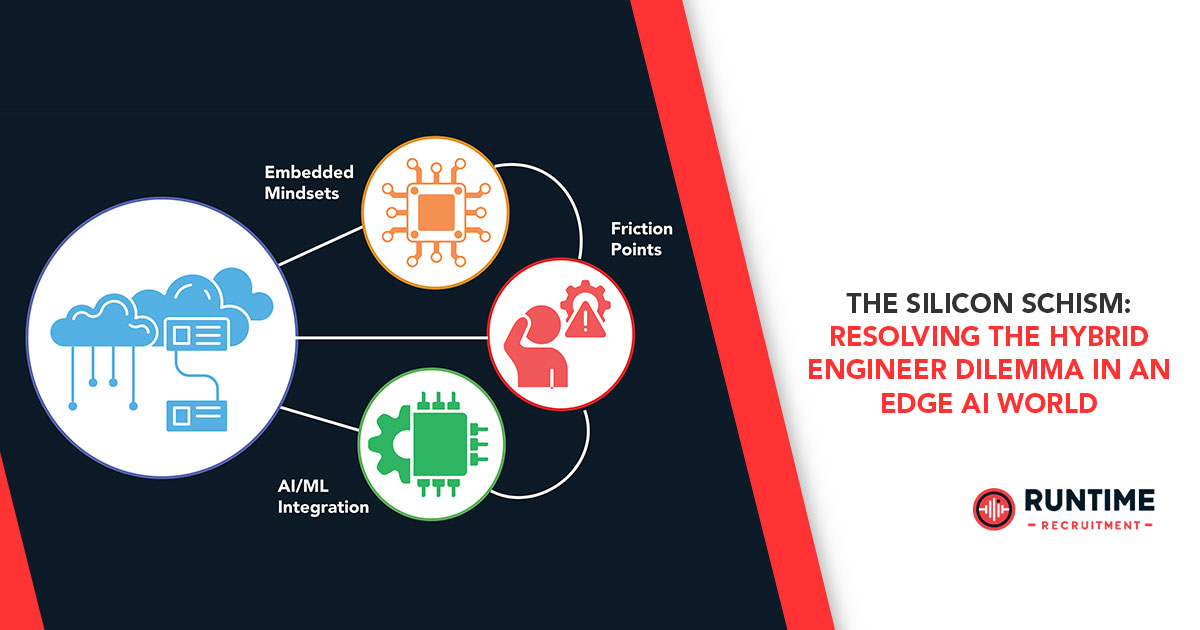
The Silicon Schism: Resolving the Hybrid Engineer Dilemma in an Edge AI World
General5 March 2026

The Silicon Schism: Resolving the Hybrid Engineer Dilemma in an Edge AI World

The landscape of embedded systems is undergoing tectonic shifts, driven by a singular, relentless force: the migration of artificial intelligence from the cloud to the furthest reaches of the network edge. We are no longer simply building devices that sense, process, and actuate based on deterministic rules. We are building devices that perceive, infer, and [...]

Read More >>
The Invisible Cost: E-Waste Ethics and the Embedded Engineer’s Design Choice
General11 February 2026

The Invisible Cost: E-Waste Ethics and the Embedded Engineer’s Design Choice

The world generates over 50 million metric tons of e-waste annually, a mountain of discarded devices and components that contains not only hazardous materials like lead and mercury but also valuable, scarce elements like gold, palladium, and rare earth metals. For the embedded engineer, whose designs power everything from industrial IoT sensors to consumer wearables, [...]

Read More >>