
Personal engineering project
Linux, RT-Smart and NuttX on RISC-V
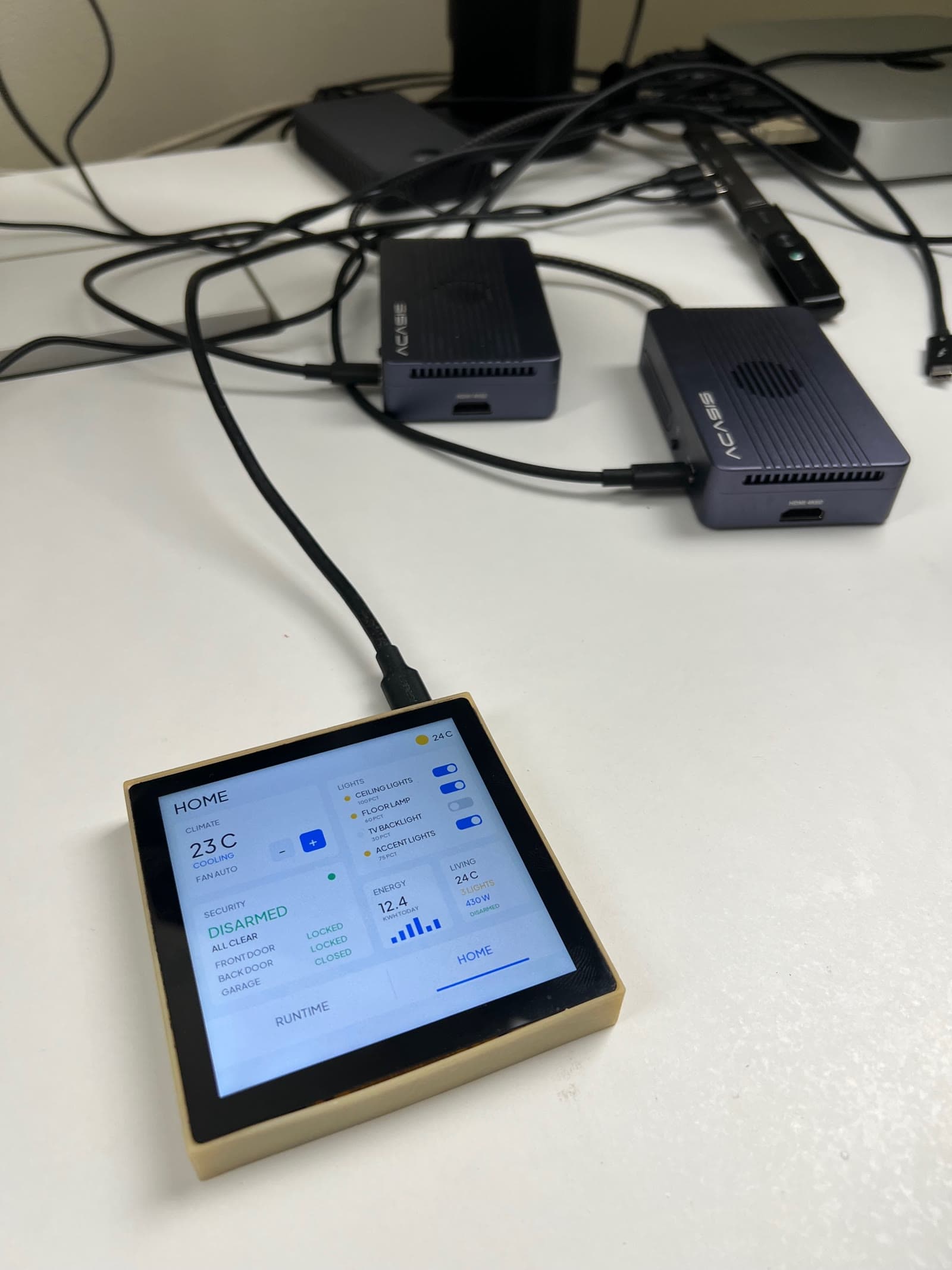
Compared three operating systems on the same Allwinner D1 hardware, investigating board bring-up, watchdog resets, timer behaviour and benchmark validity. The work also produced a native touchscreen application with working display, touch input and Wi-Fi.
The tested configurations use different protection and execution models; the comparison is not a claim that one OS is universally superior.Explore the project on GitHub ↗