
At university, one technology fascinated me more than any other.
Not the Pentium. Not DSPs. The Transputer.
Back in the late 1980s and early 1990s, a British company called Inmos took a radically different approach to computing. Instead of building ever-larger CPUs, they asked a different question:
What if computing power came from connecting many processors together?
The result was the Transputer.
Each Transputer had four high-speed serial links that allowed it to communicate directly with four neighbouring processors. Connect enough of them together and you could build massively parallel computing systems capable of tackling scientific, imaging, and signal-processing workloads that were difficult to solve with traditional architectures of the time.
Even more interesting, Inmos didn't just build the silicon. They created their own programming language called Occam, designed specifically around concurrency, message passing, and parallel execution. Long before multicore CPUs became mainstream, they were building software around parallelism from the ground up.
My final-year university project was built around this technology. I used a Transputer-based system for EEG signal processing, analysing brainwave data across a parallel computing architecture.
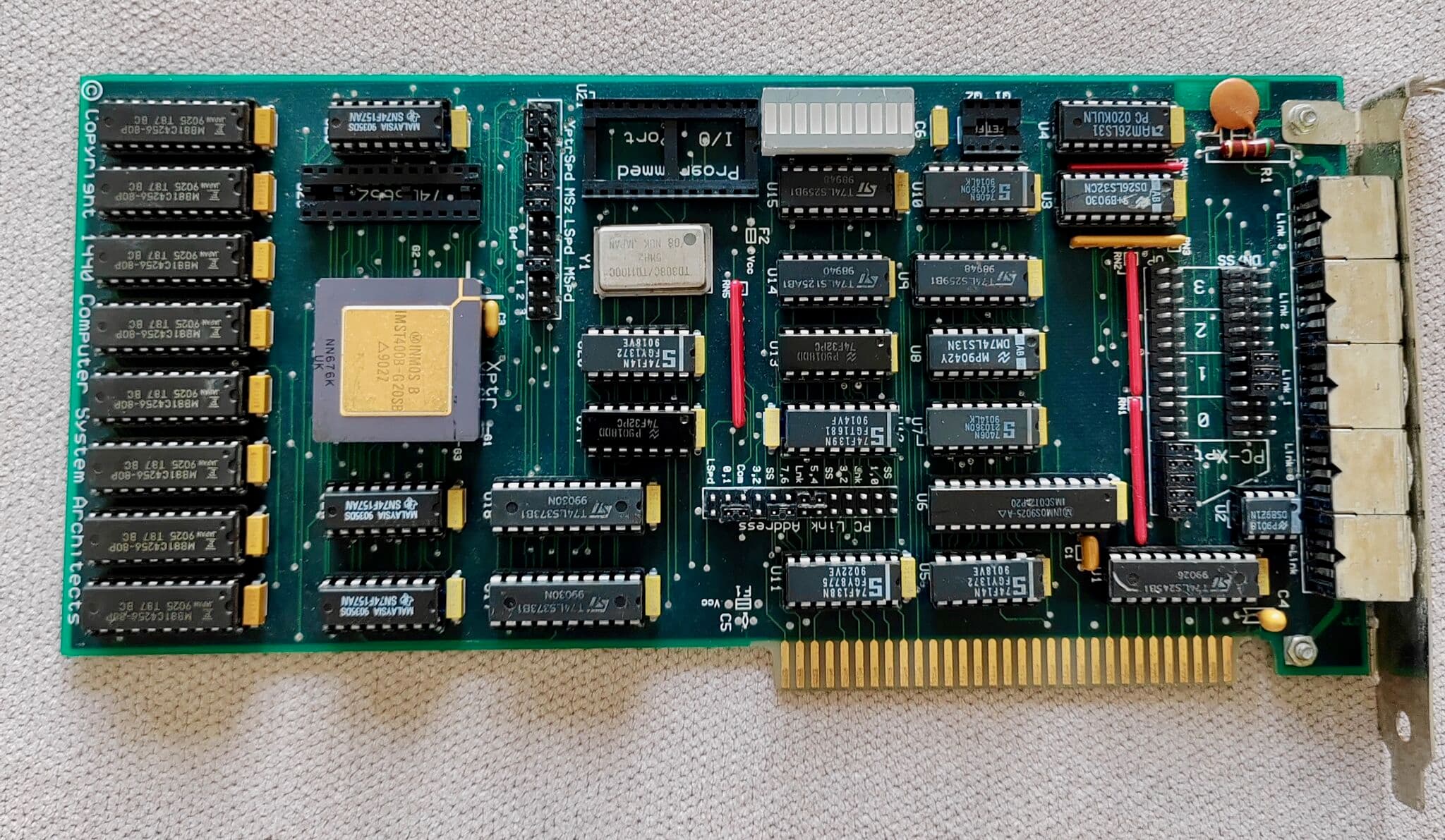
Recently I pulled out the original T400 evaluation board I used all those years ago. It still works.
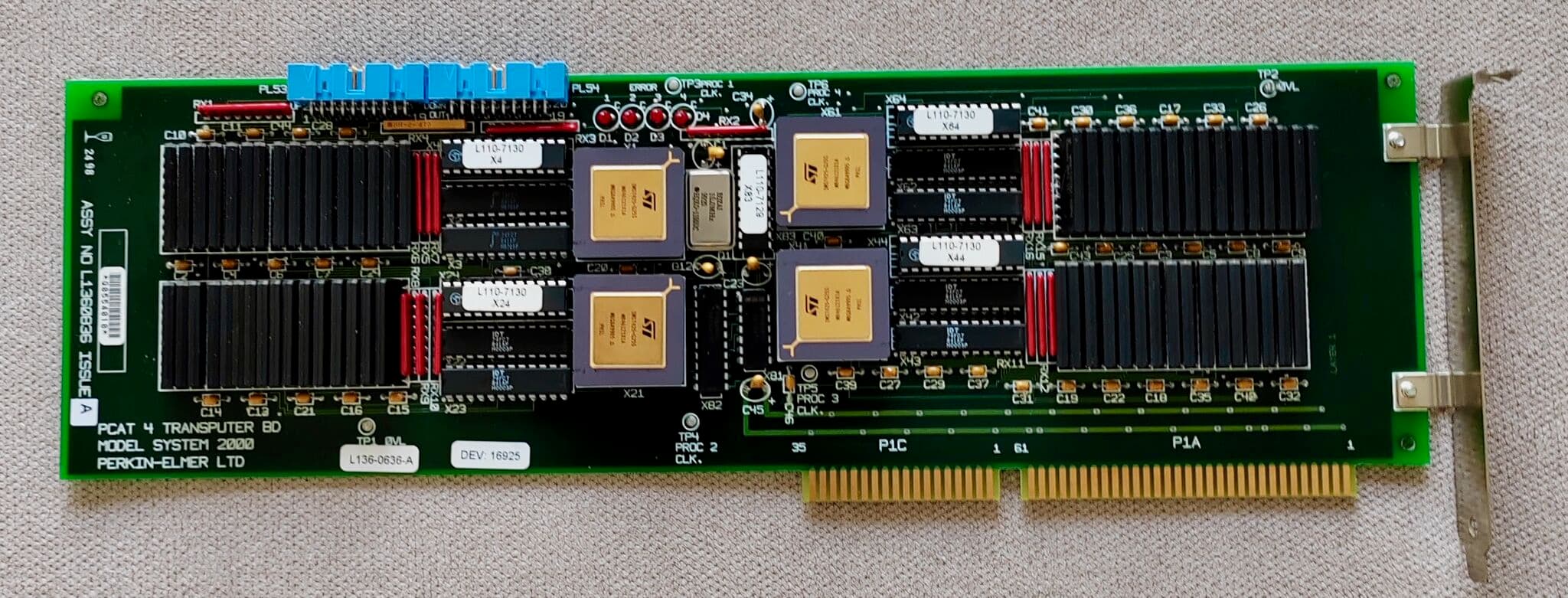
Then, while browsing eBay, I stumbled across something even more interesting: a brand-new four-Transputer board, still unused, built around the more capable T425 devices with external SRAM attached to each processor.
Naturally, I bought it.
What makes this even more fascinating is that although Inmos disappeared in the early 1990s after being sold to STMicroelectronics, these chips continued to be manufactured for scientific and industrial systems. The chips on this board were actually fabricated in May 1999, nearly a decade after the technology's commercial peak.
My next challenge is getting the hardware running again. That means building a modern interface between a Linux system and 1990s ISA hardware, reverse engineering enough of the board to boot software, and hopefully bringing this little parallel computer back to life.
It's easy to think distributed computing, message passing, and massively parallel systems started with cloud computing.
The Transputer was doing it decades earlier.
Did anyone else here work with Transputers, Occam, or parallel processing systems back in the day?
I'd love to hear your stories and compare notes.
#Transputer #Inmos #VintageComputing #RetroComputing #ParallelComputing #Occam #EmbeddedSystems #ComputerArchitecture #RetroTech #SignalProcessing #EEG #STMicroelectronics #Engineering #ReverseEngineering #TechHistory